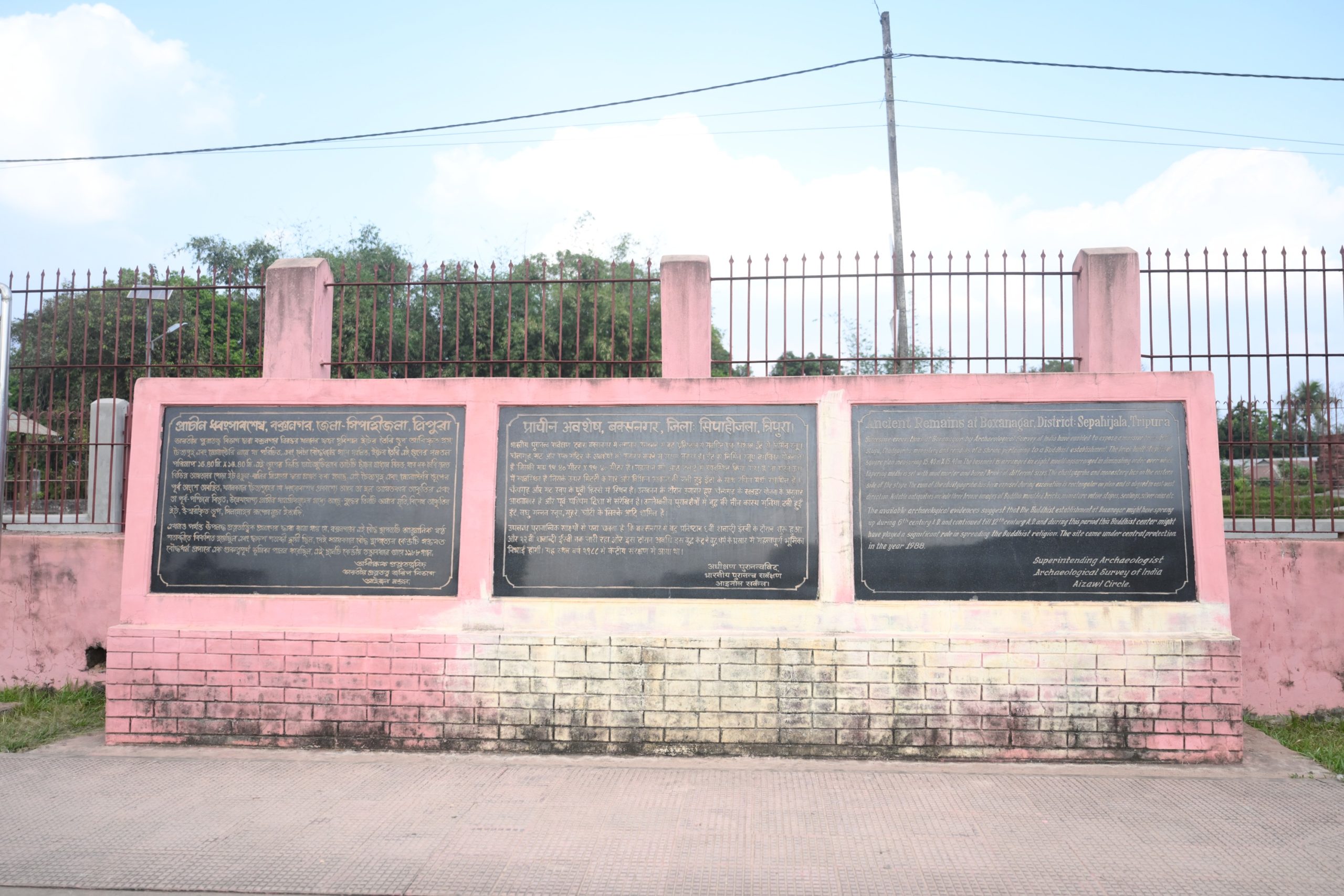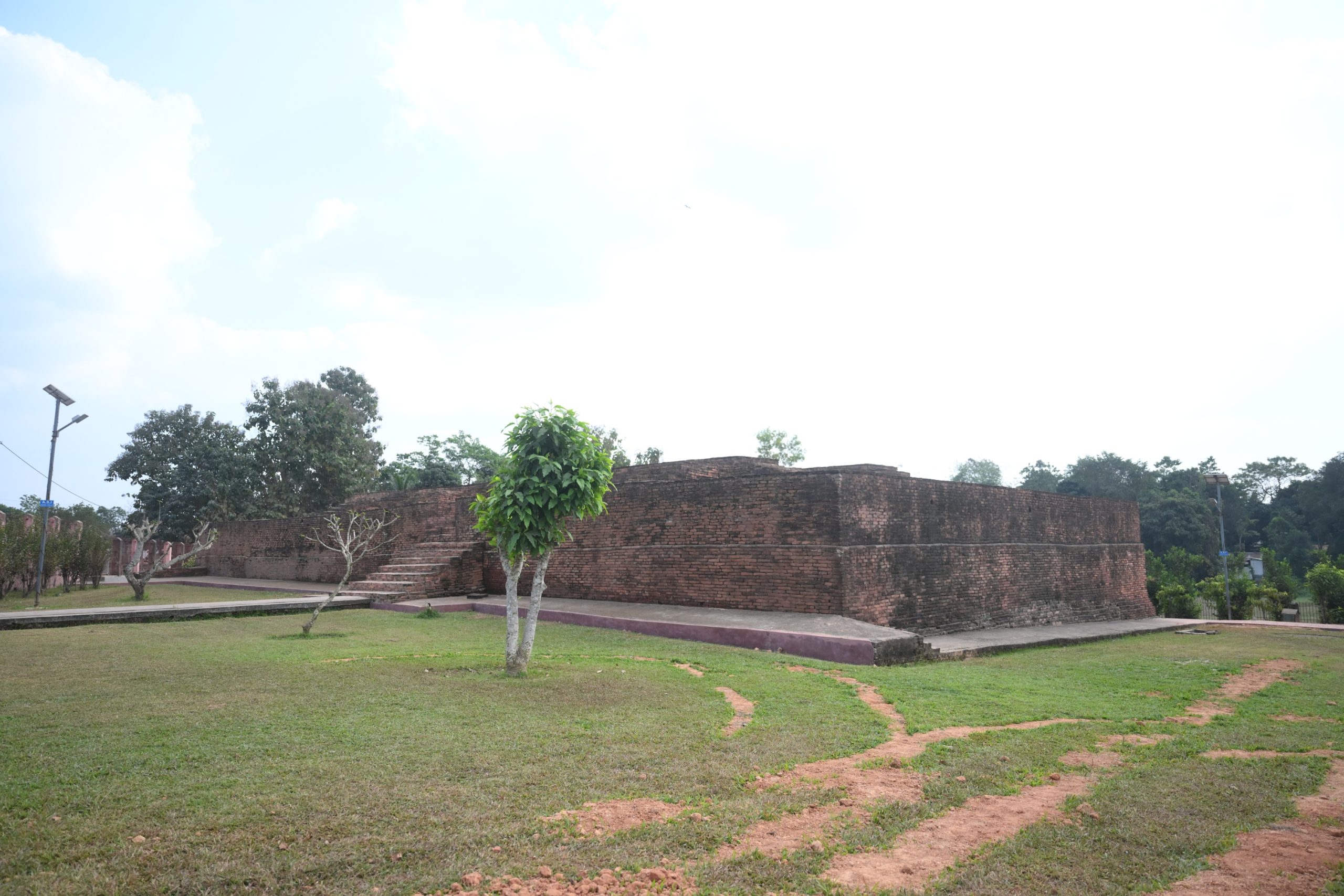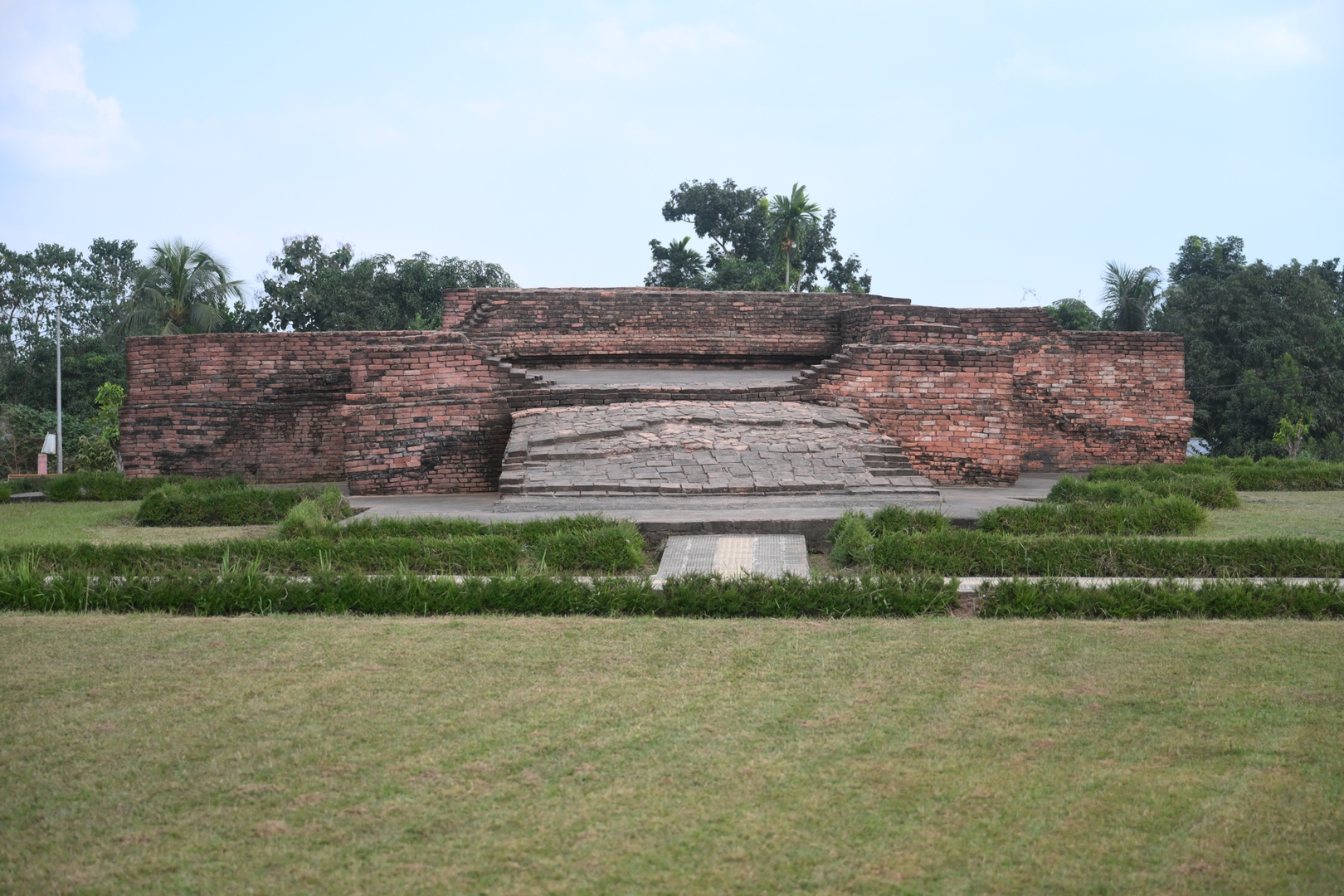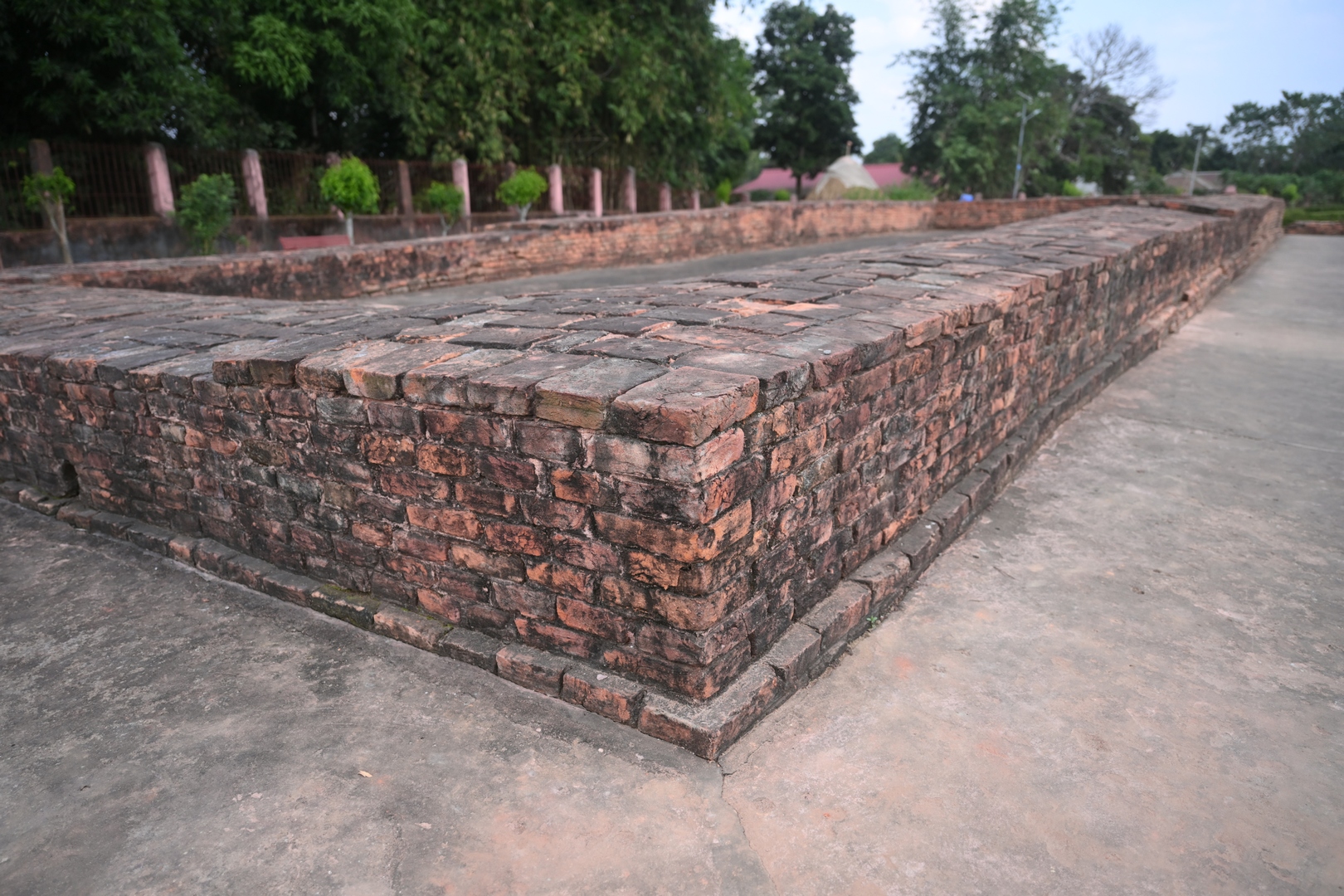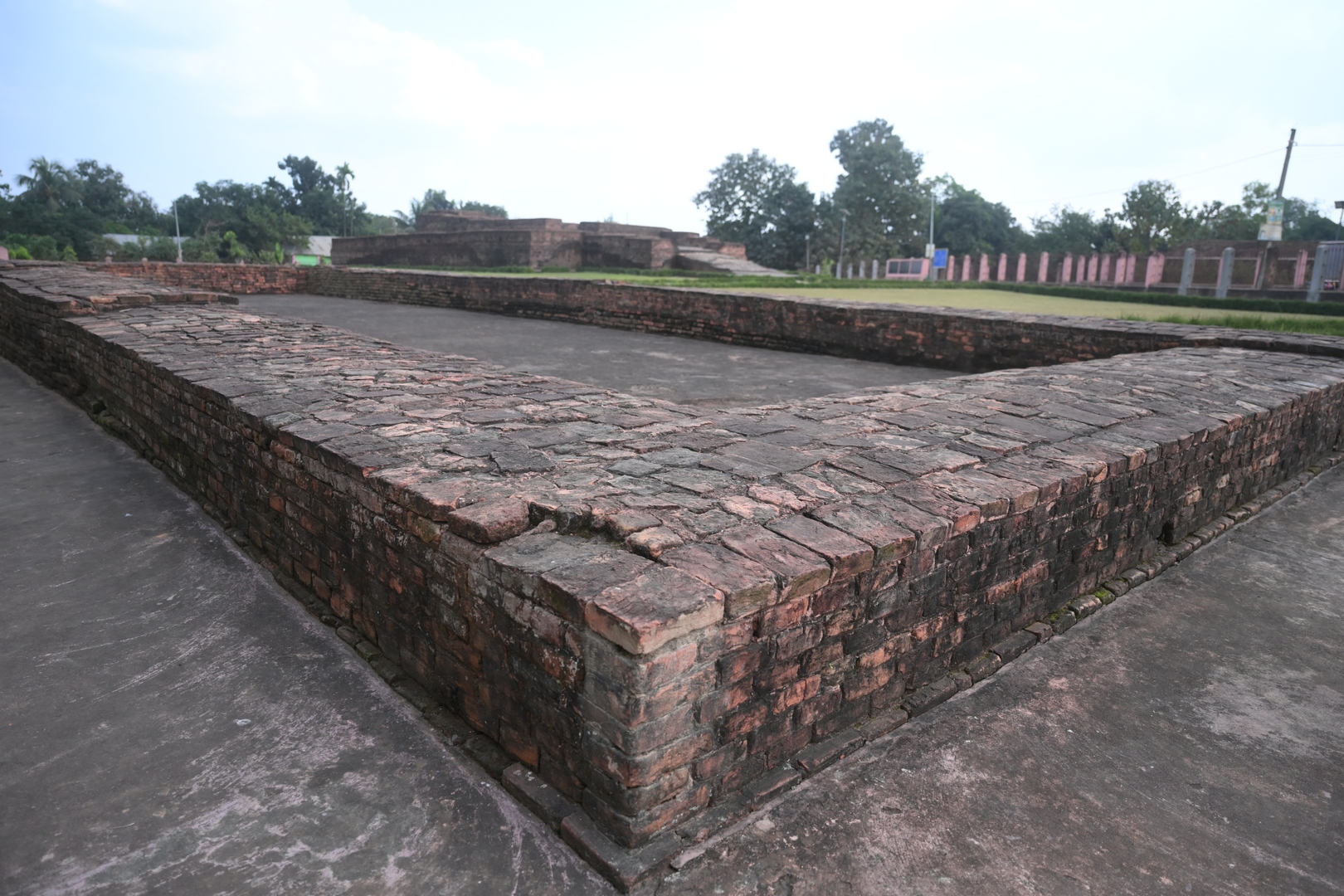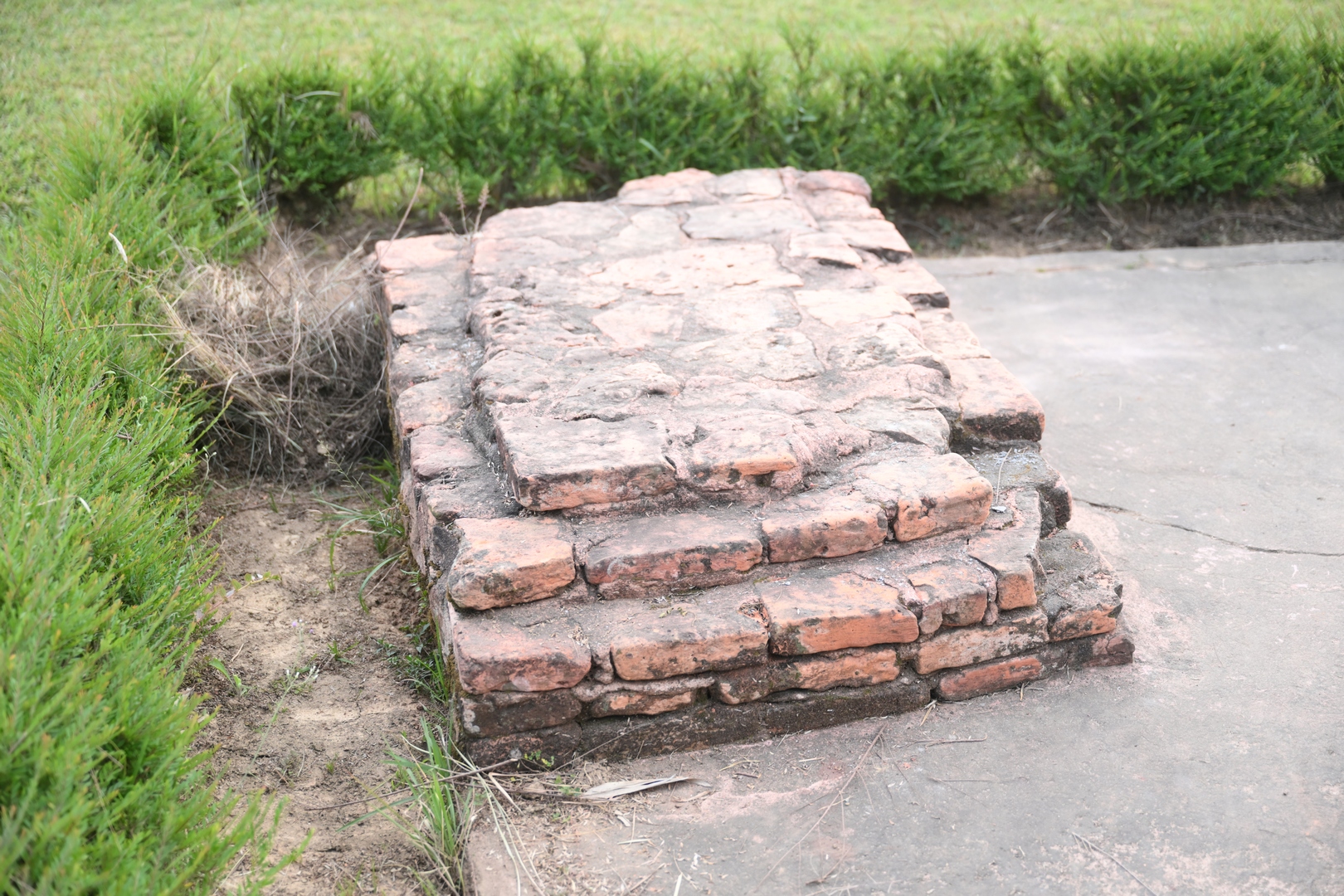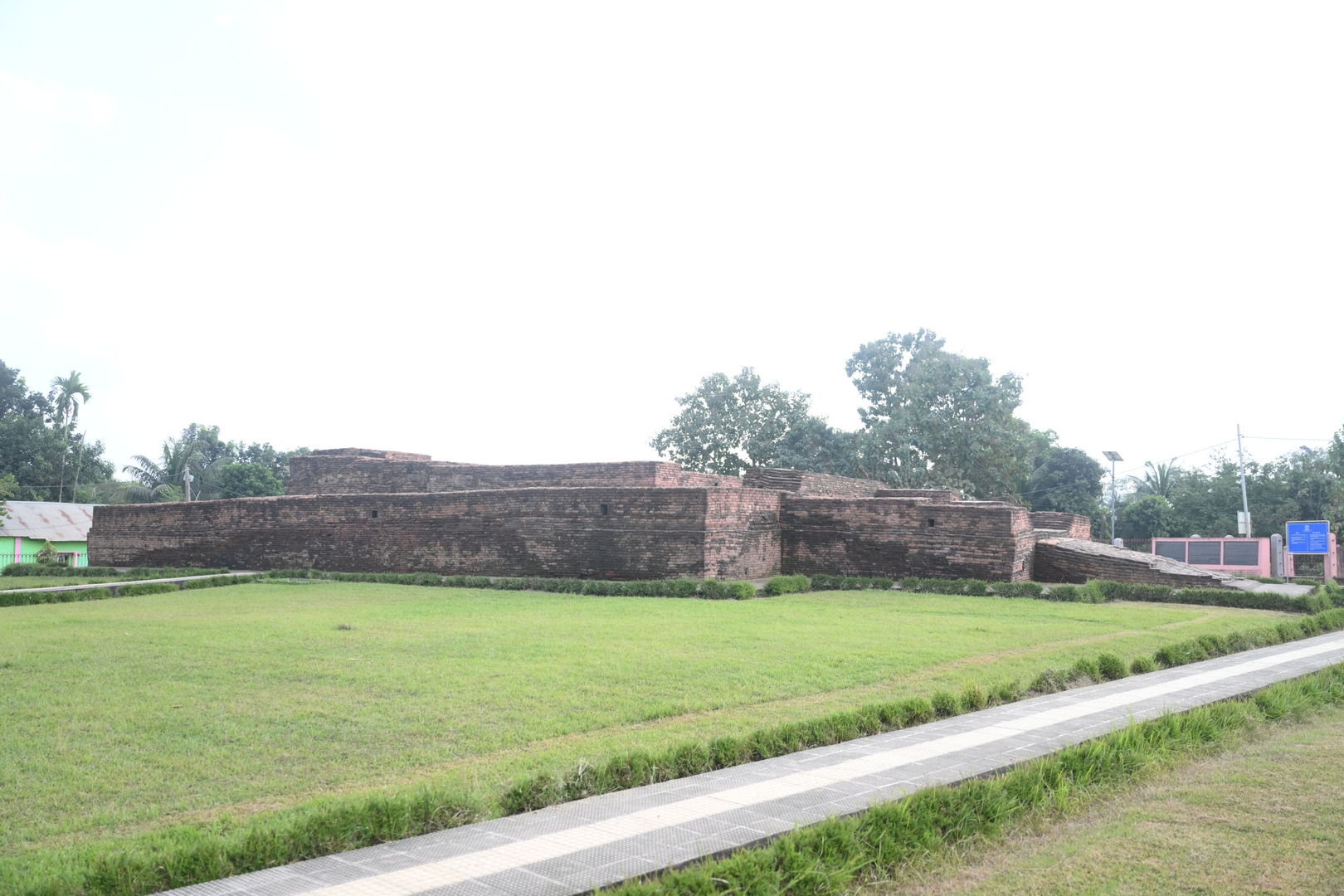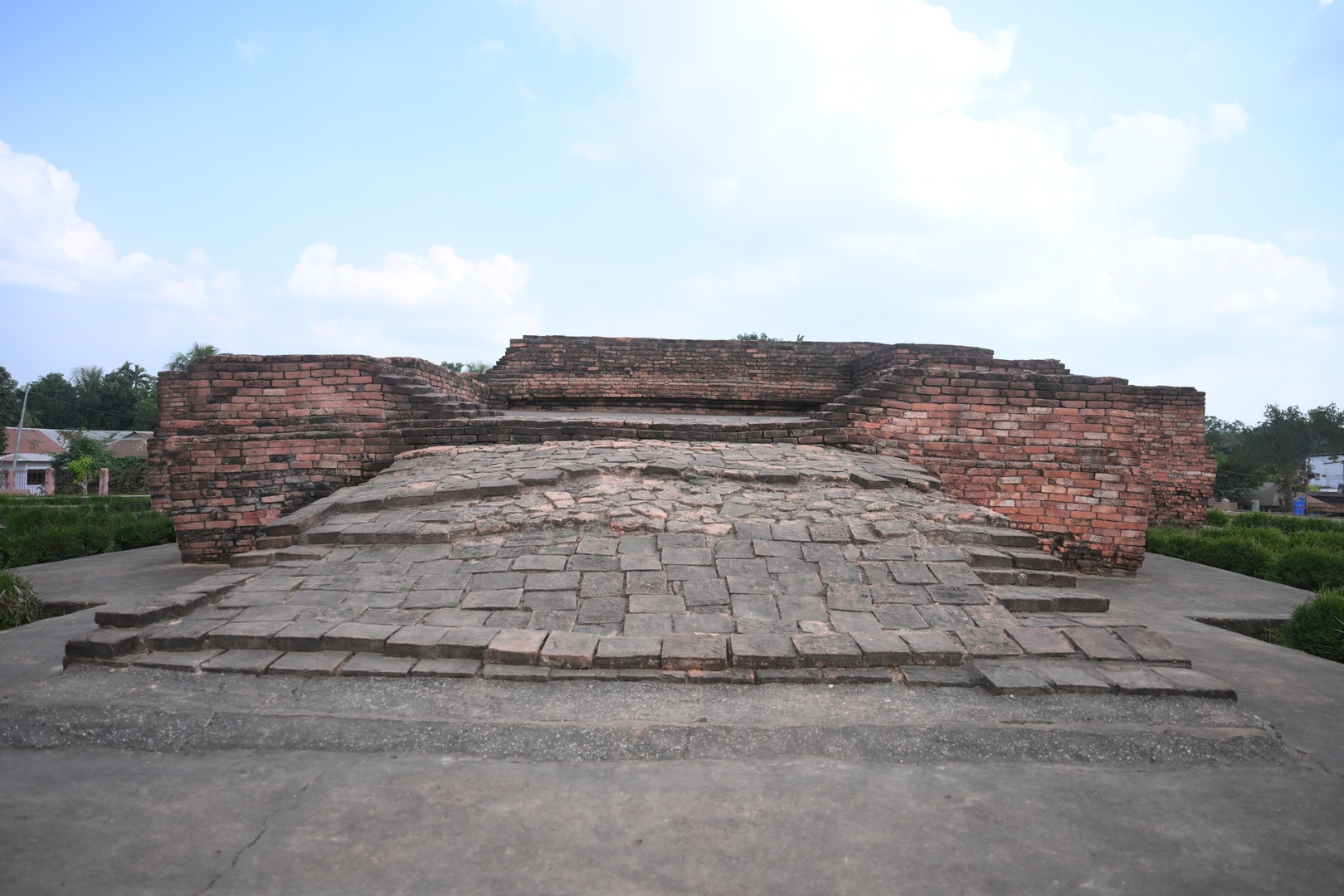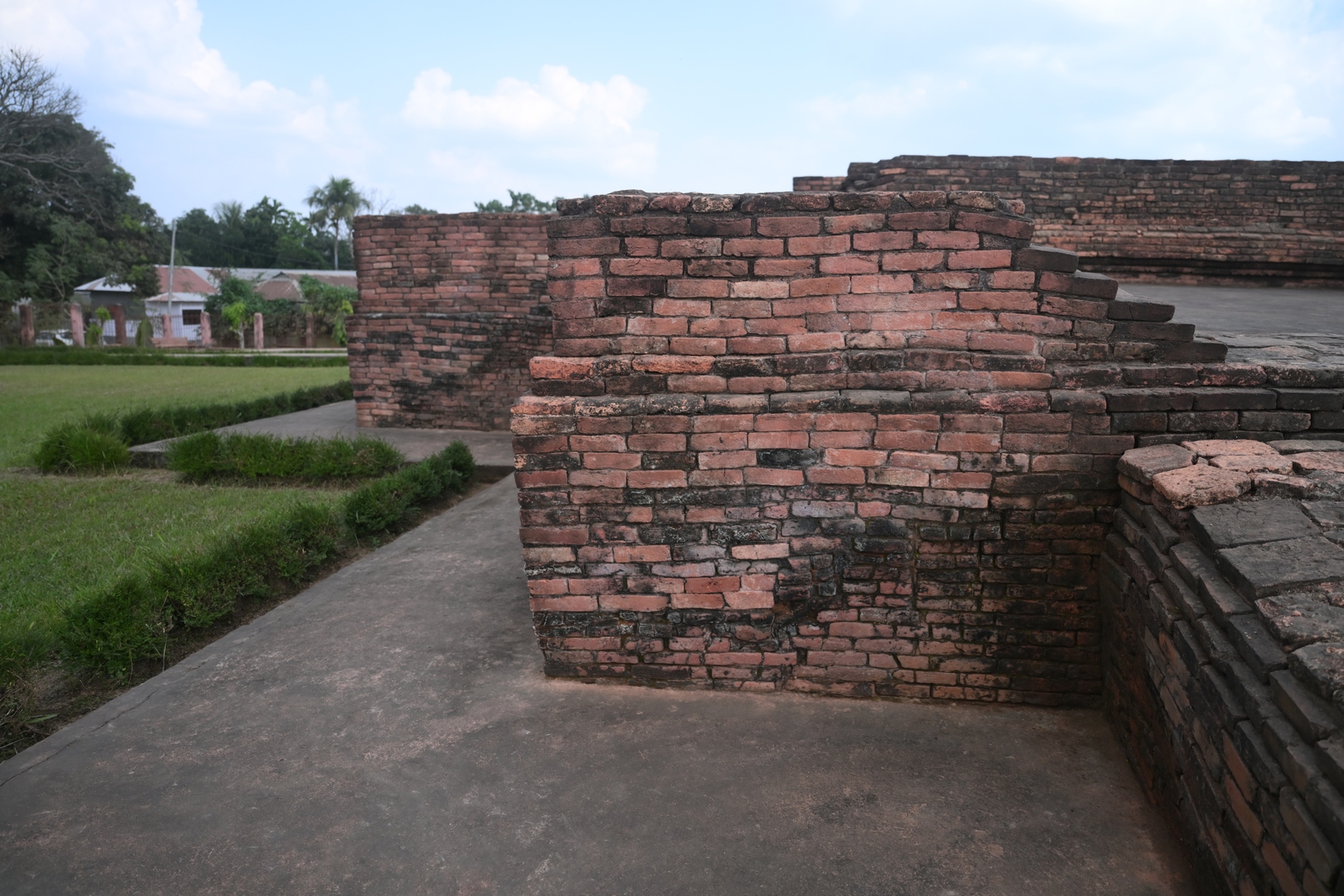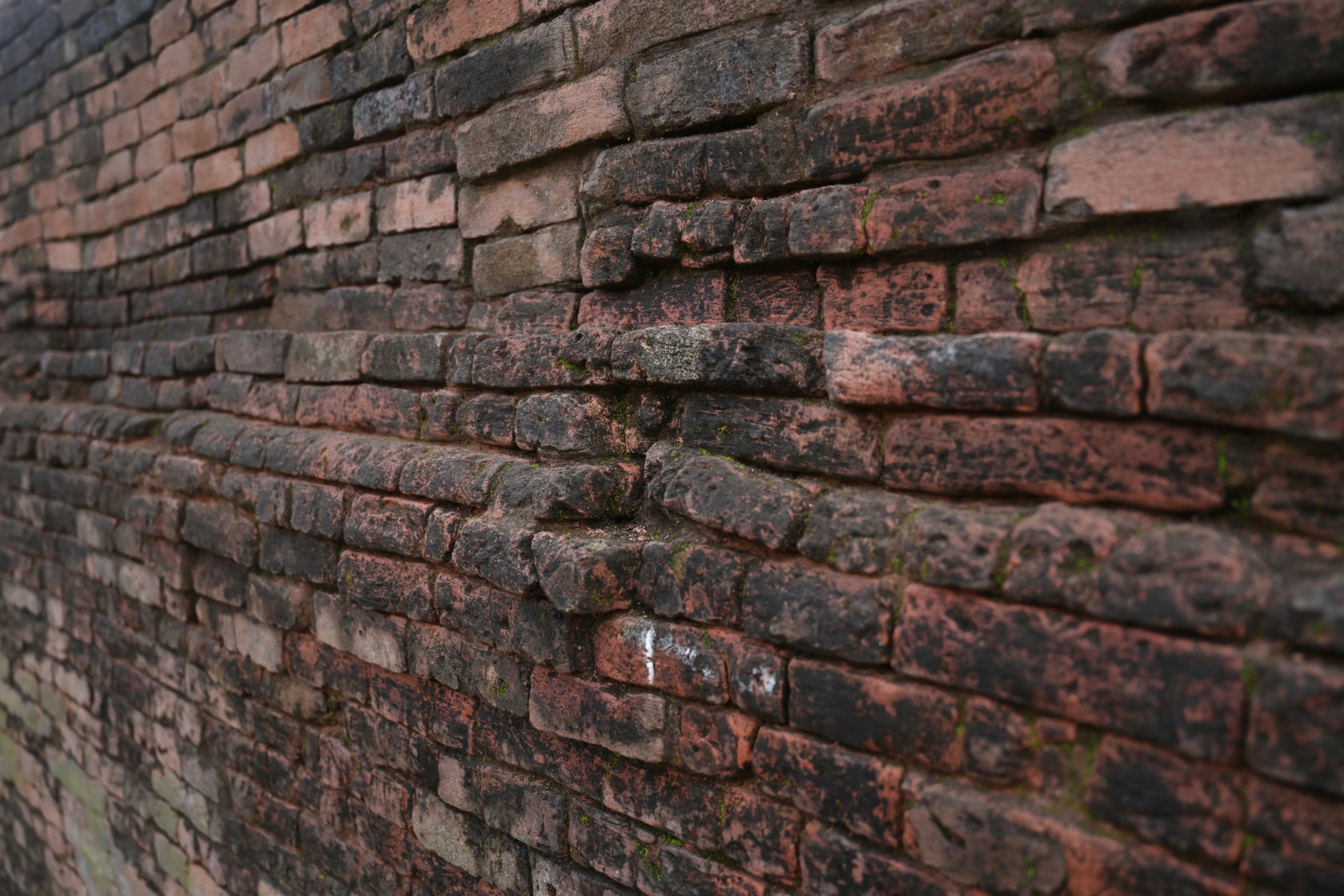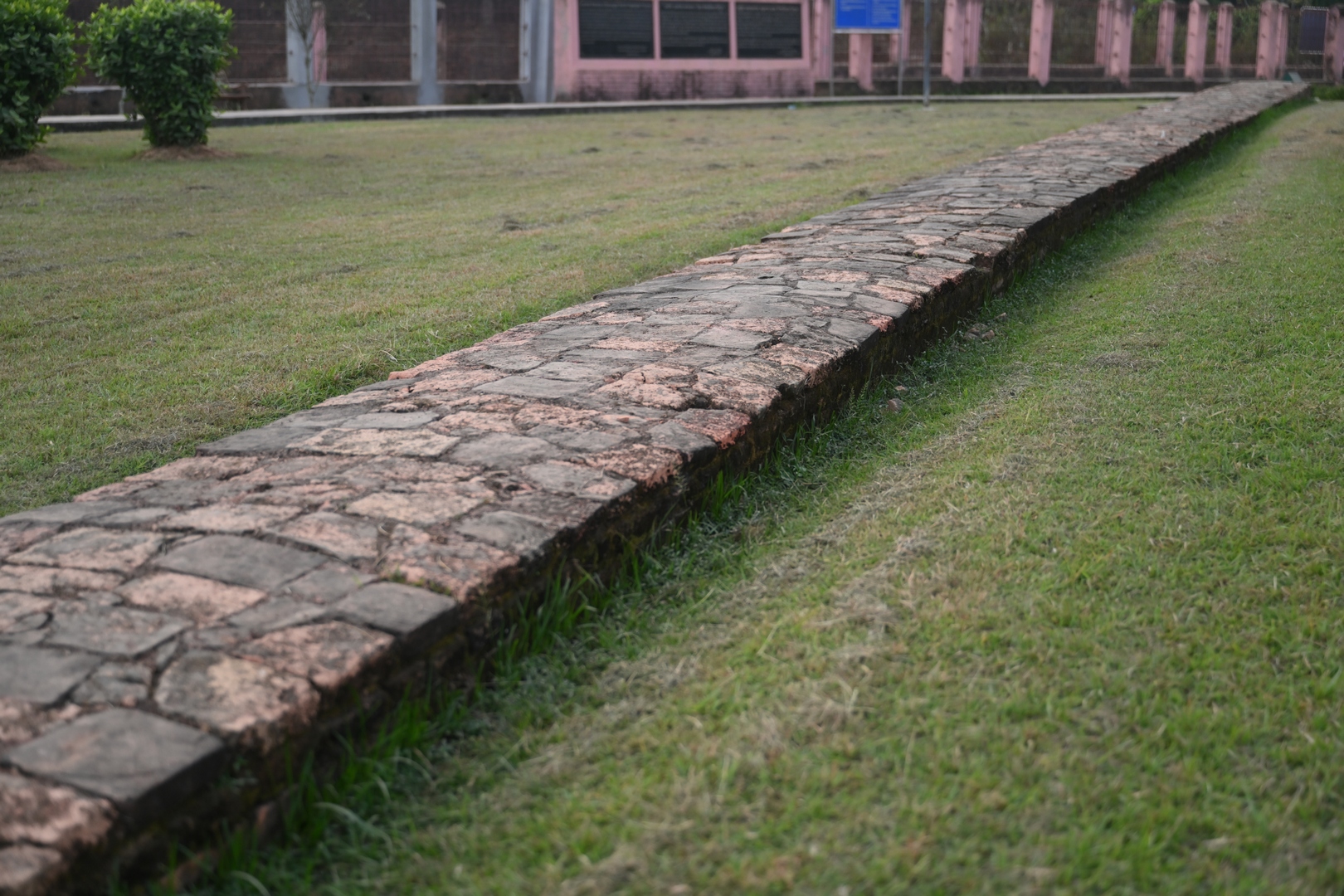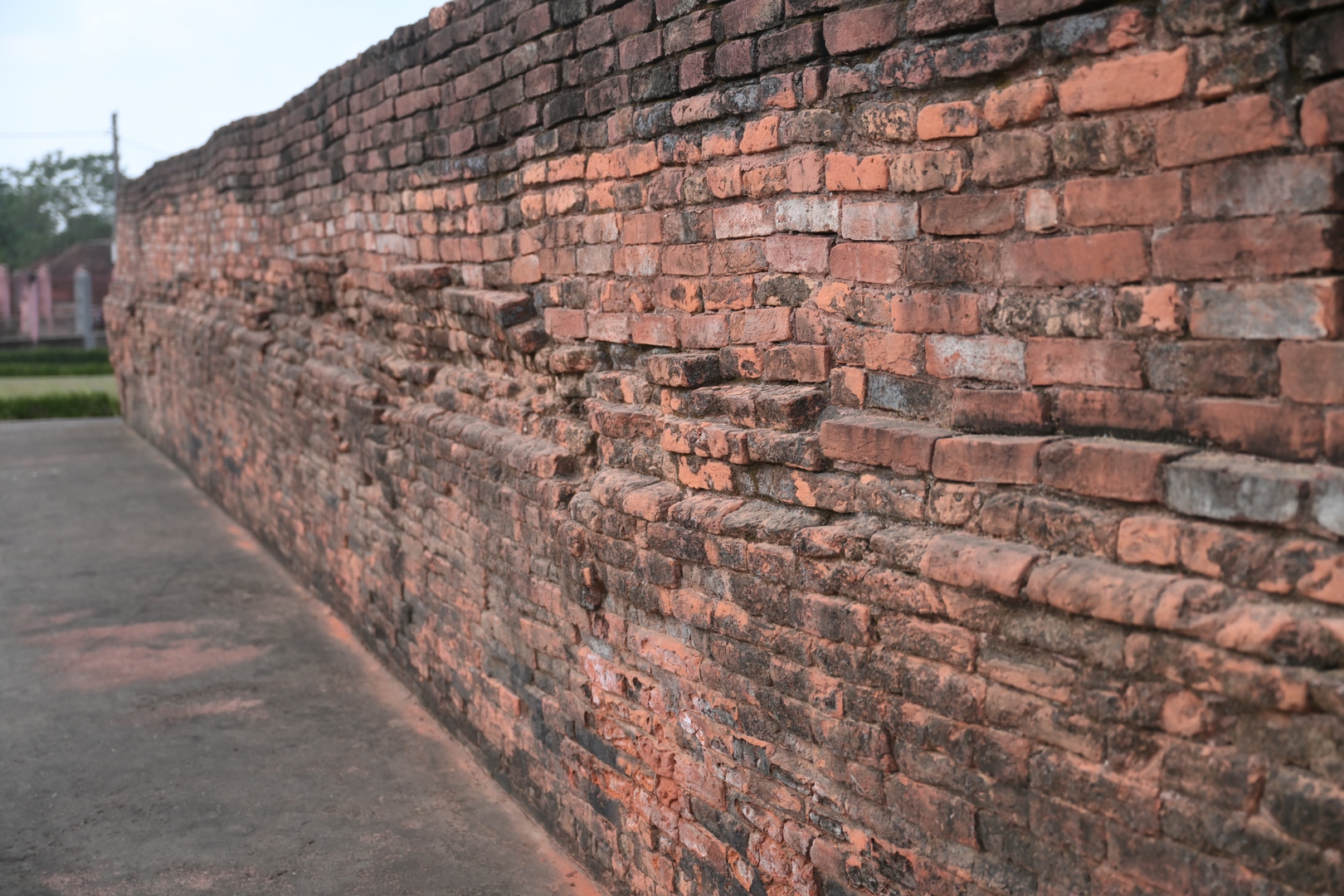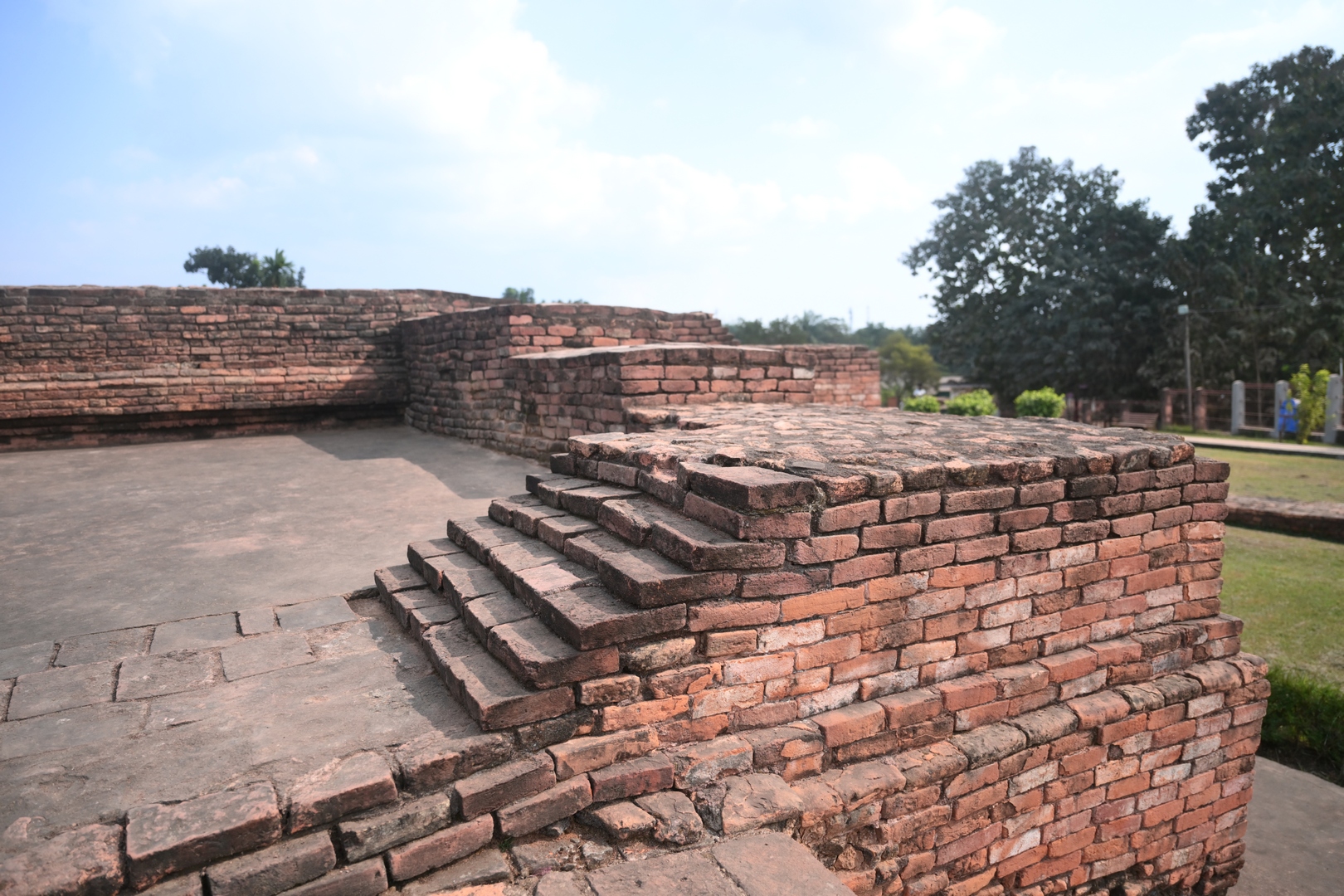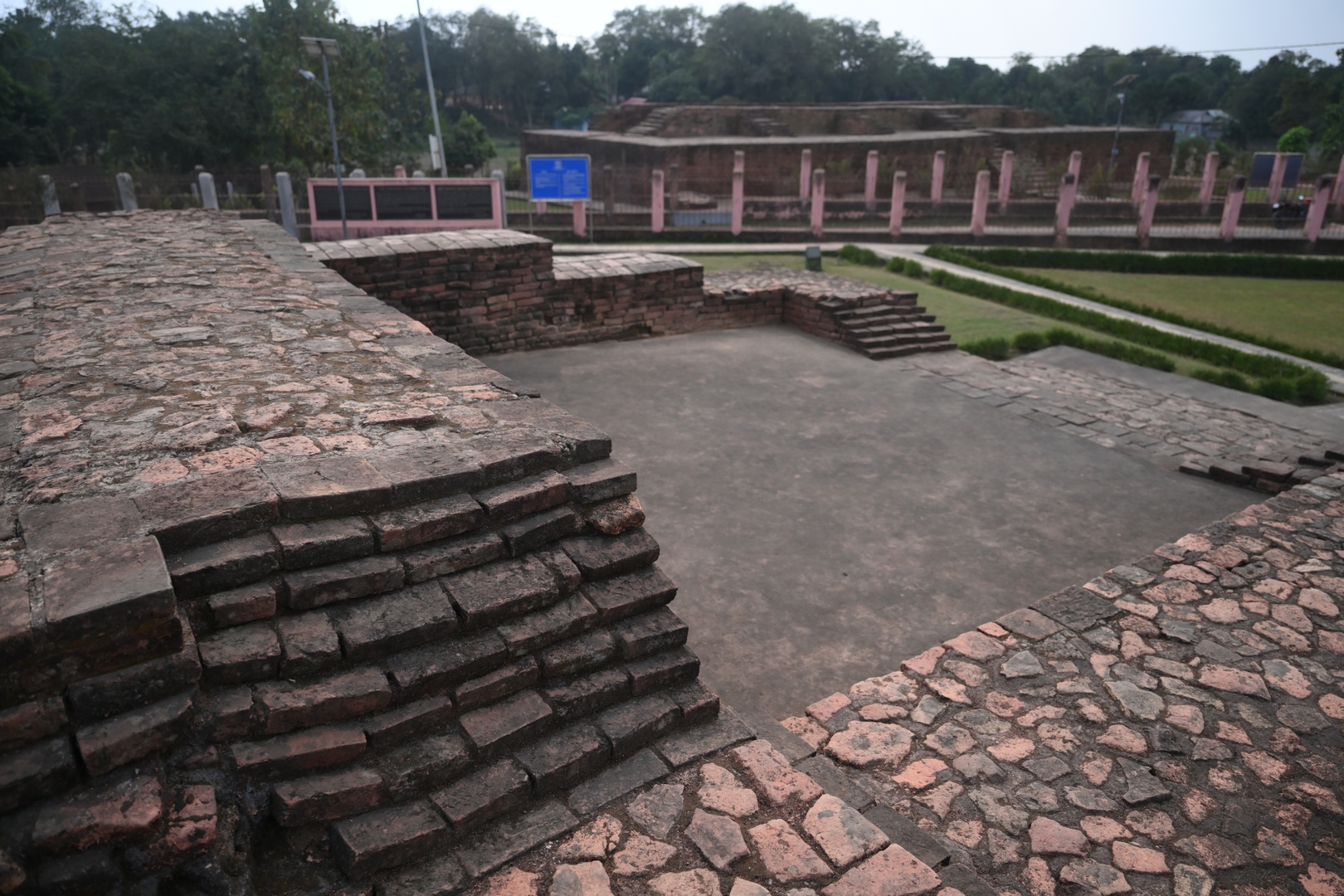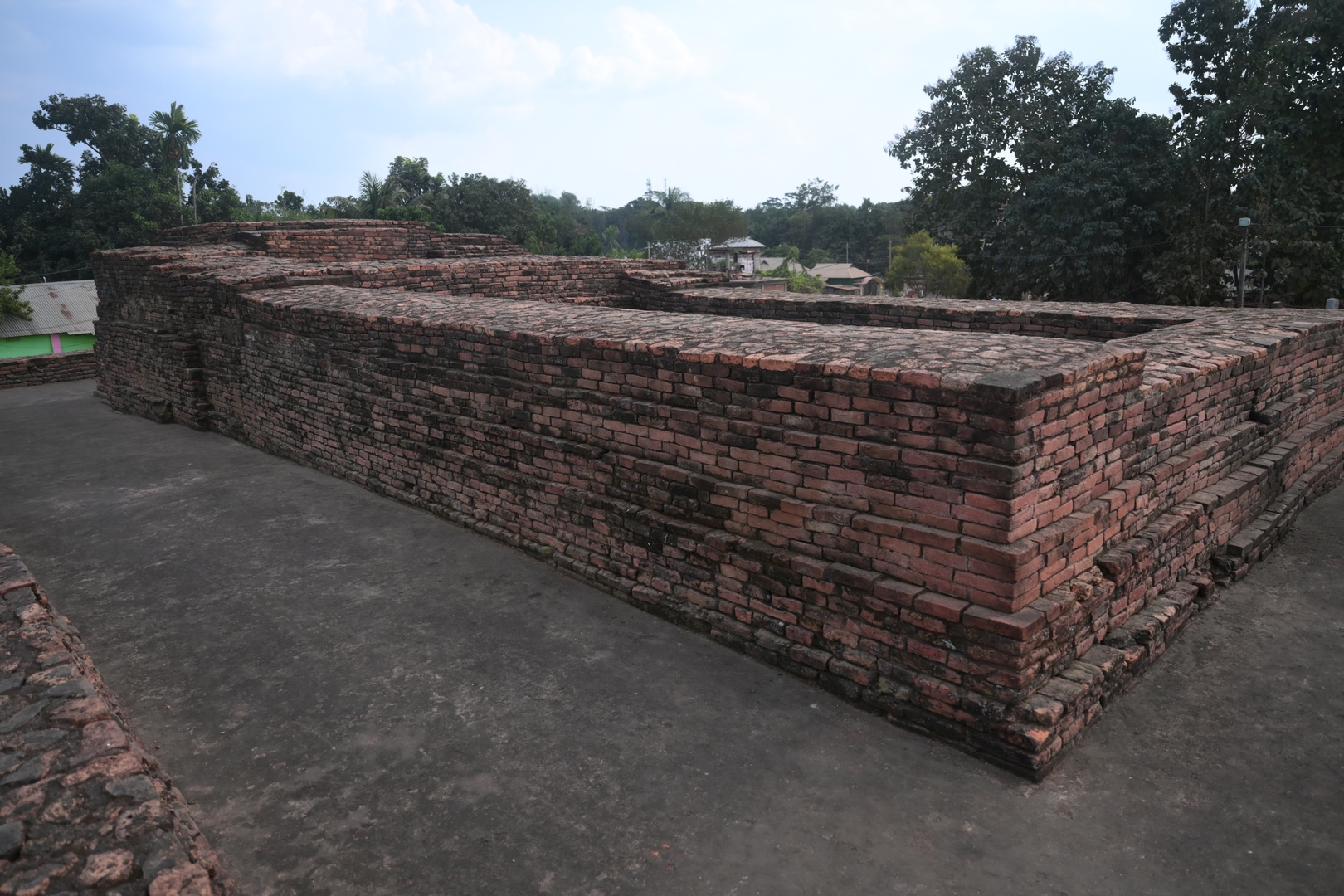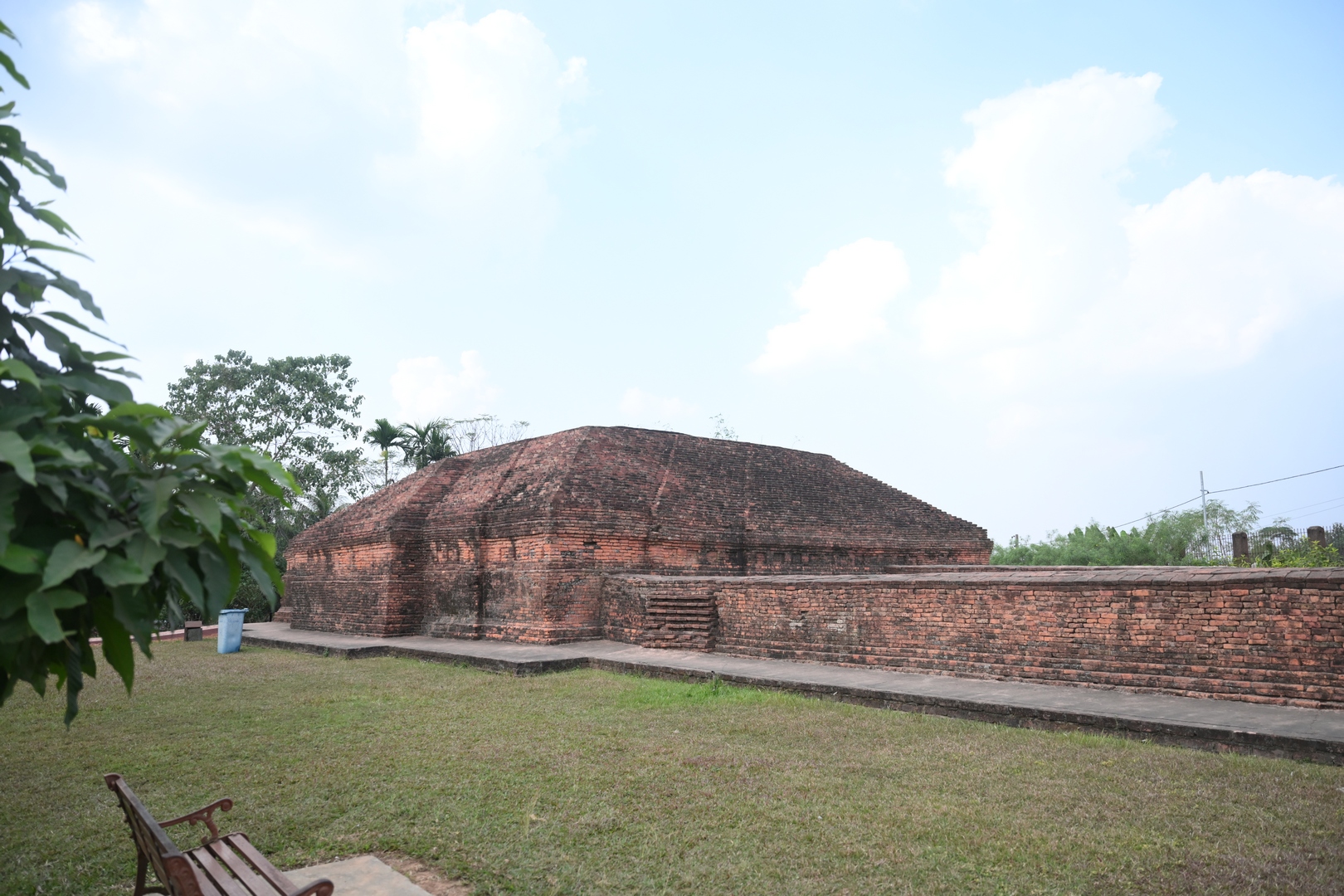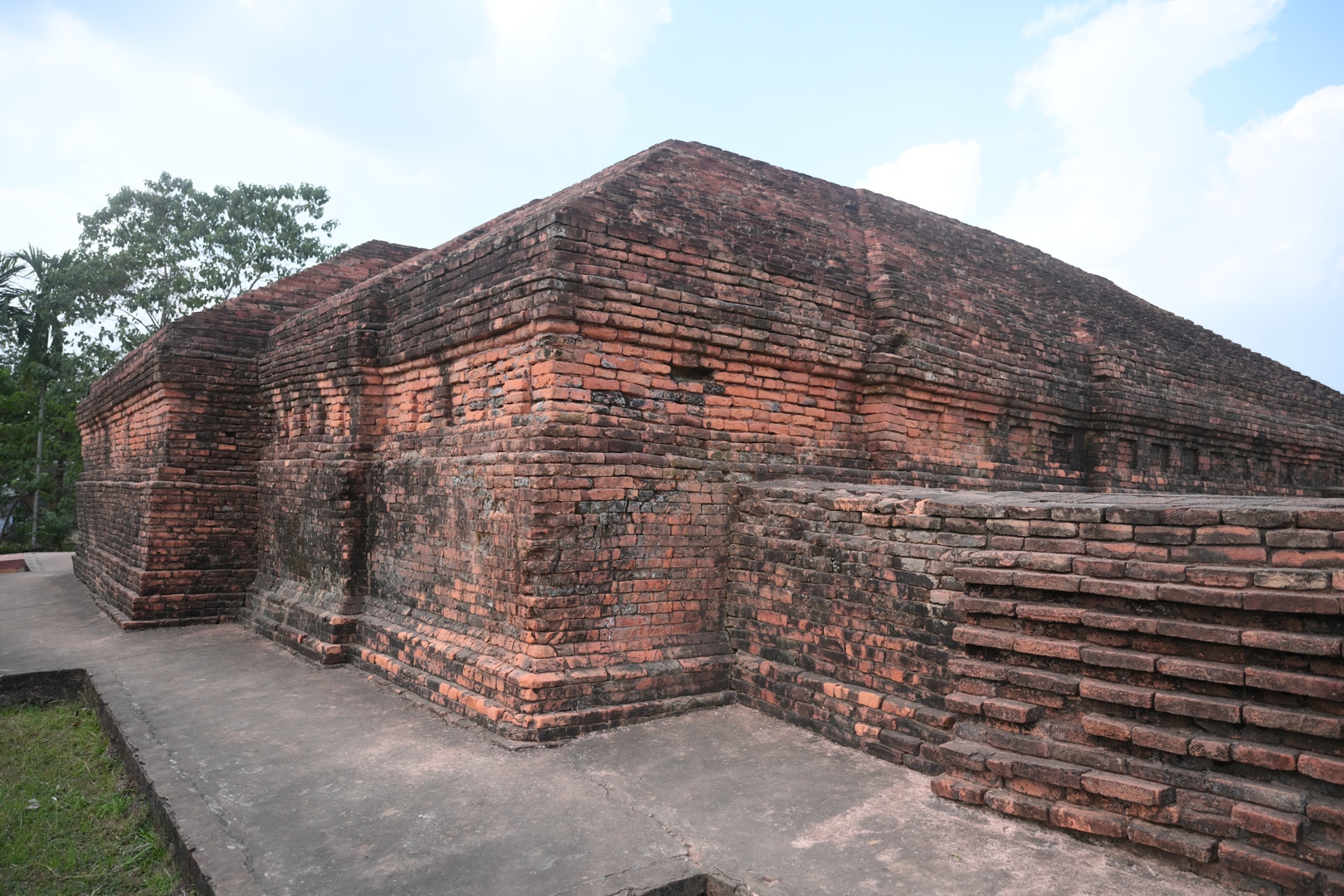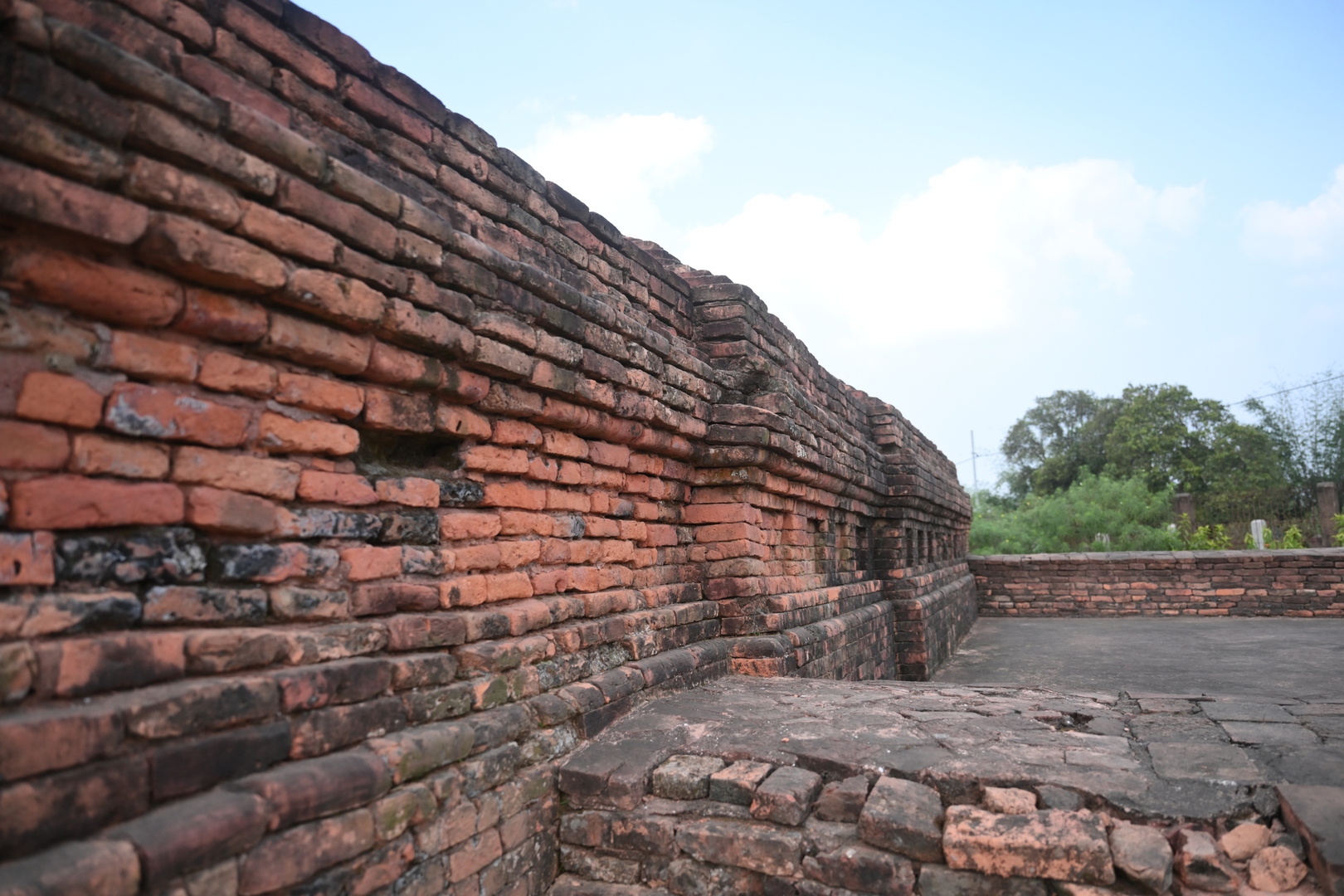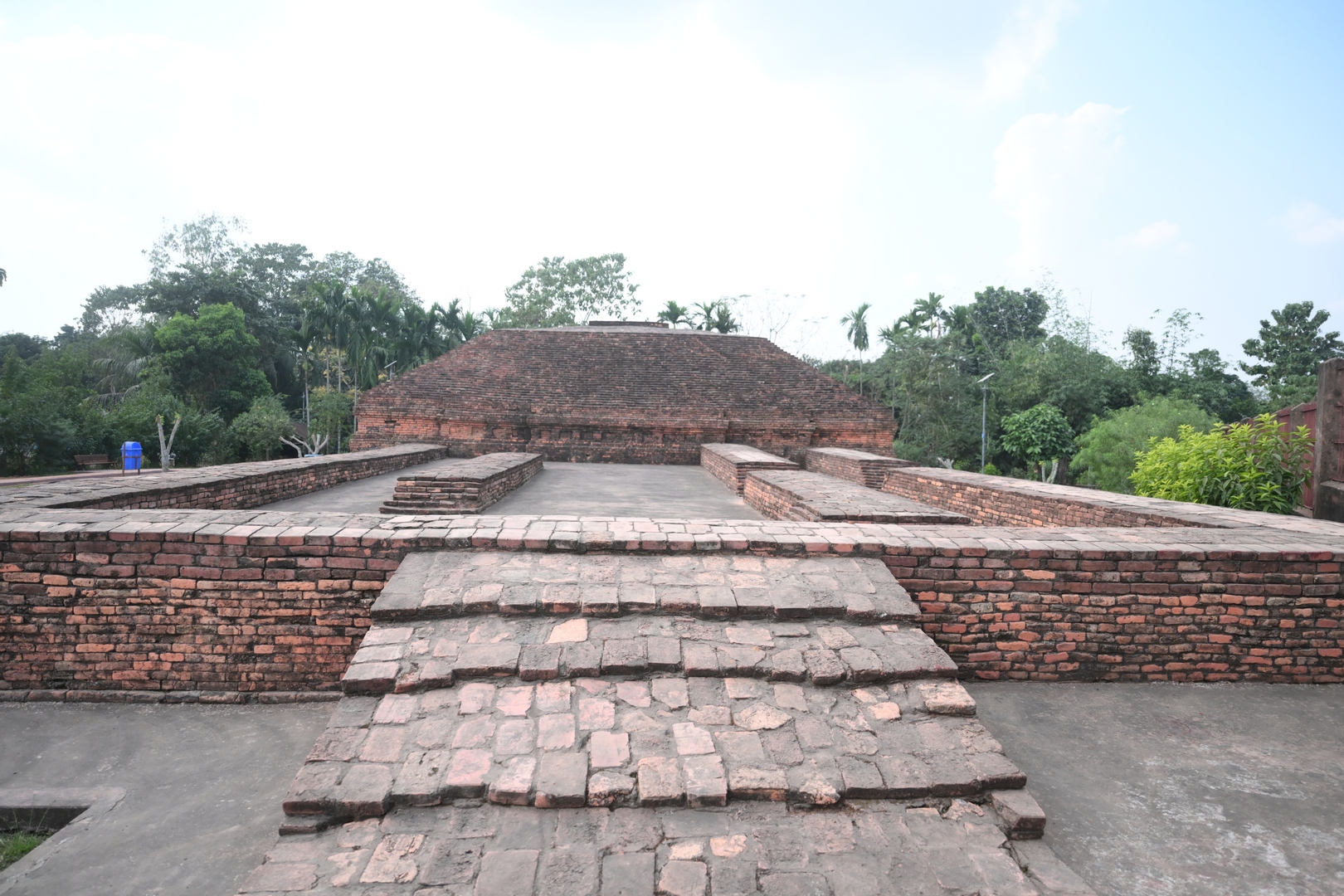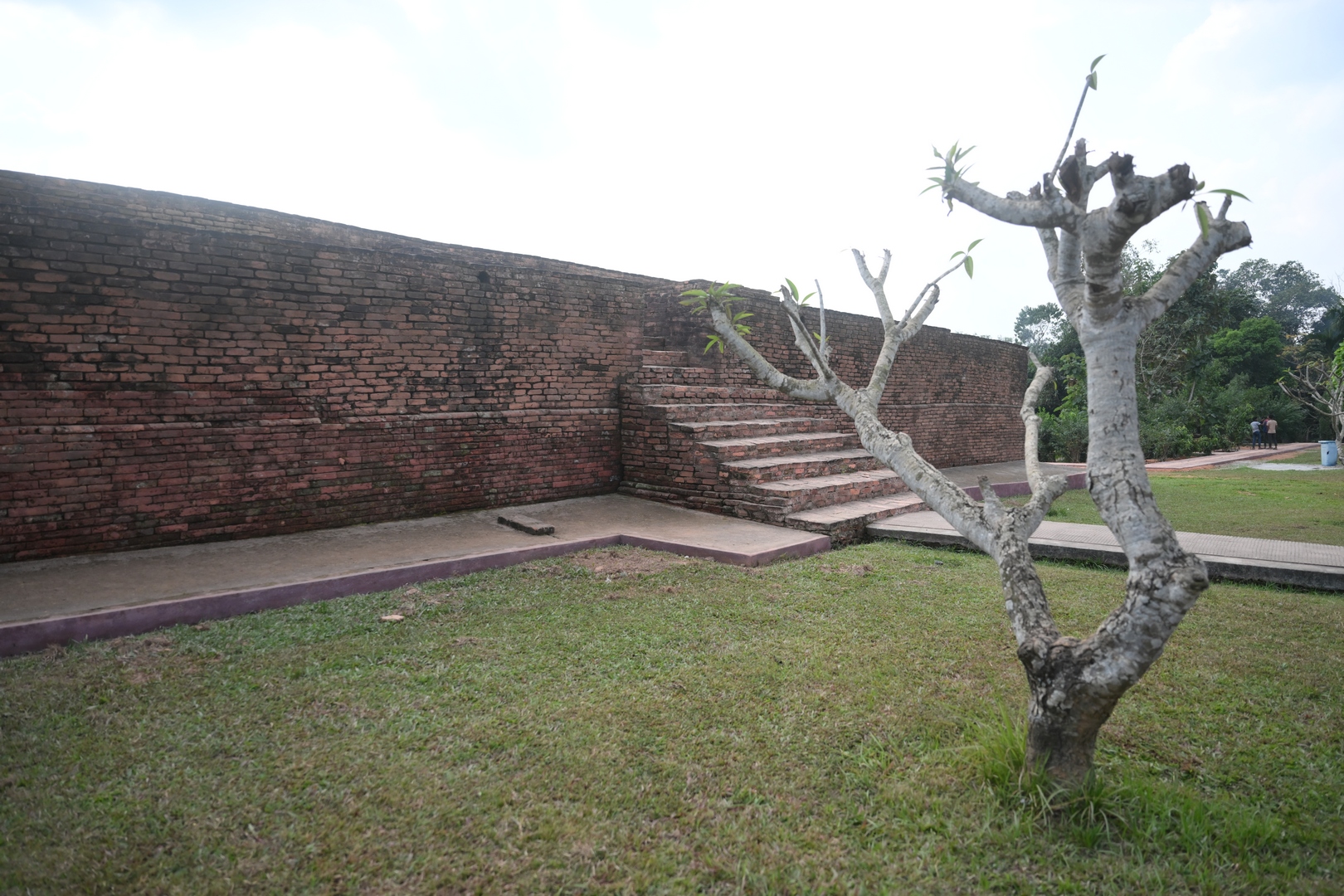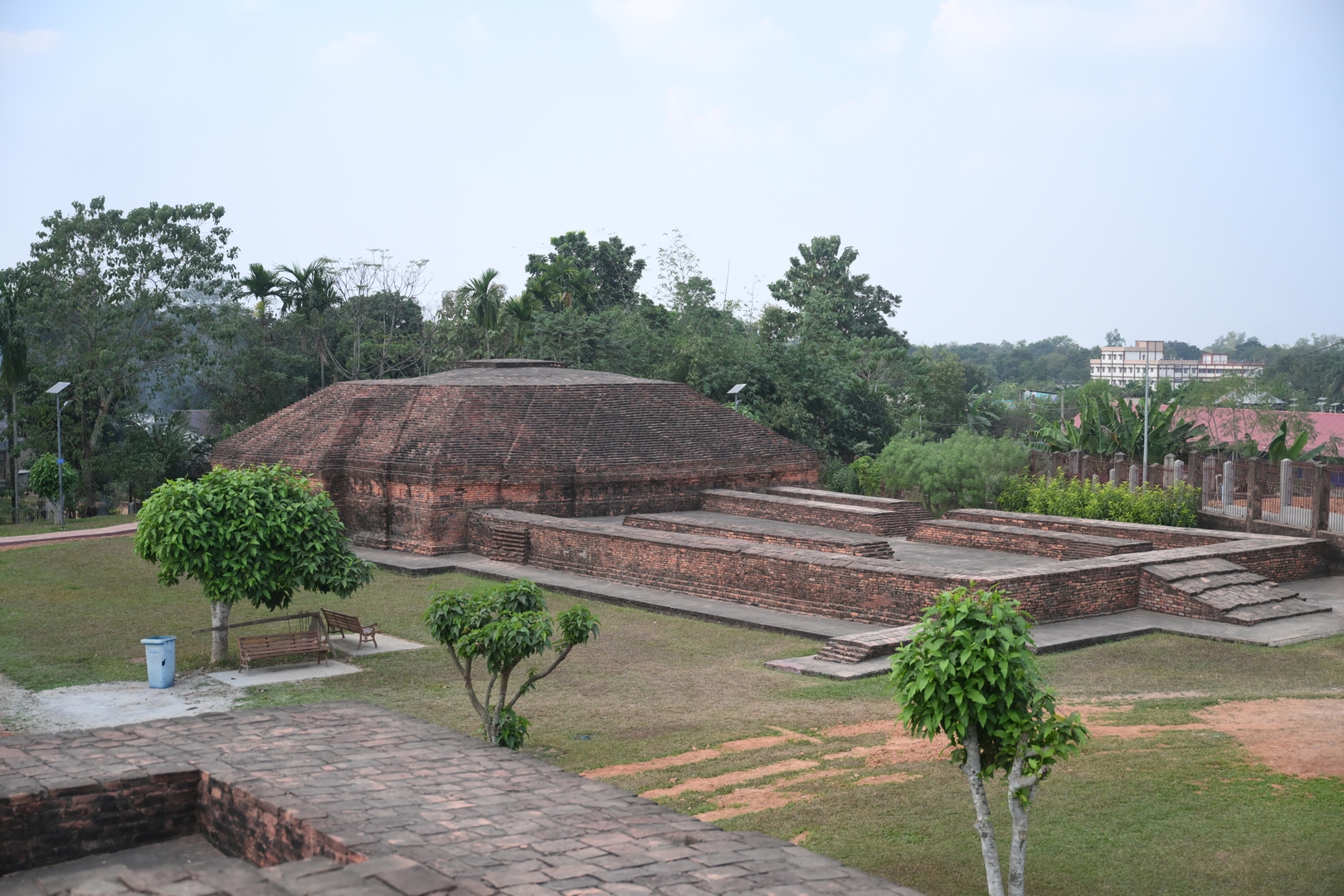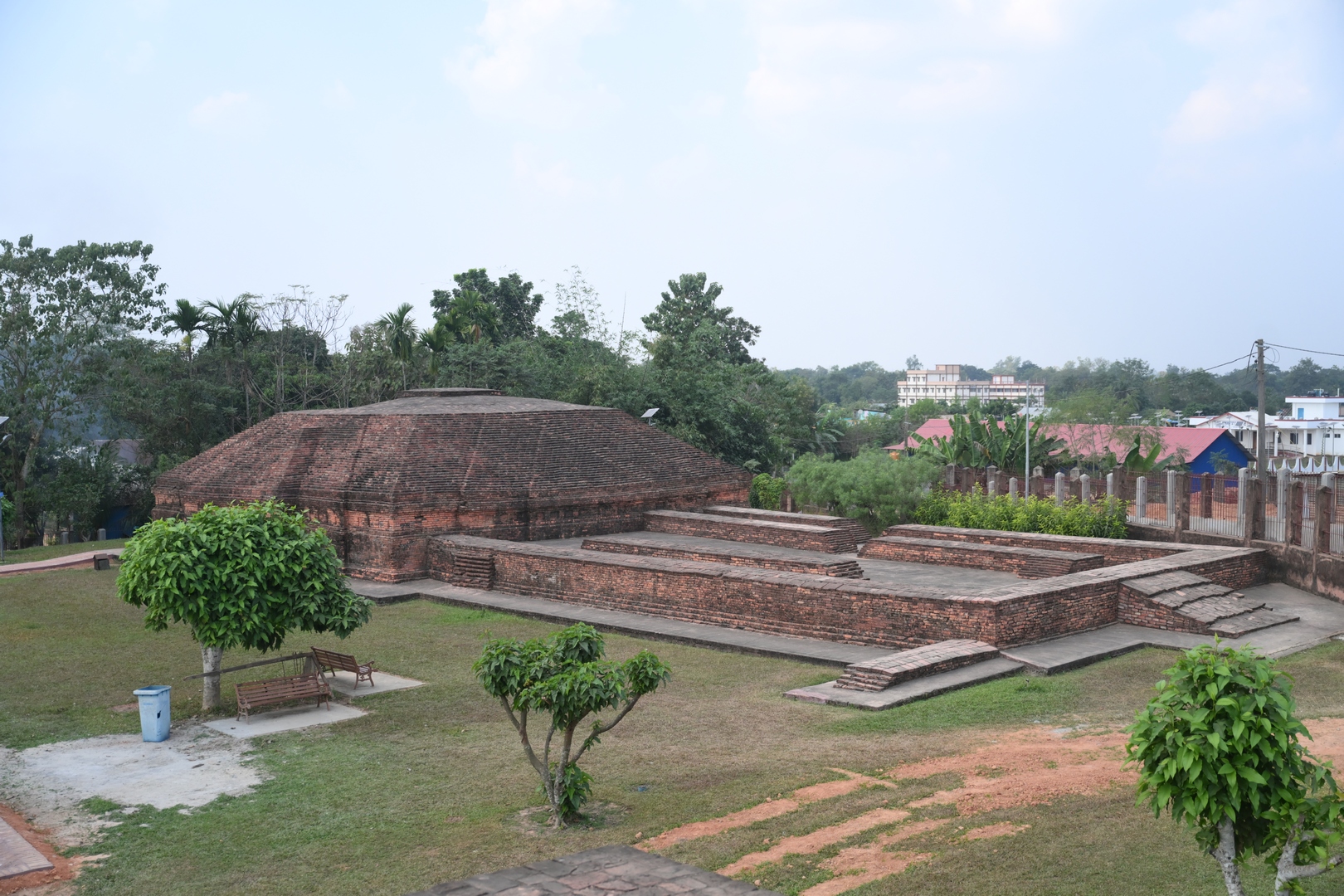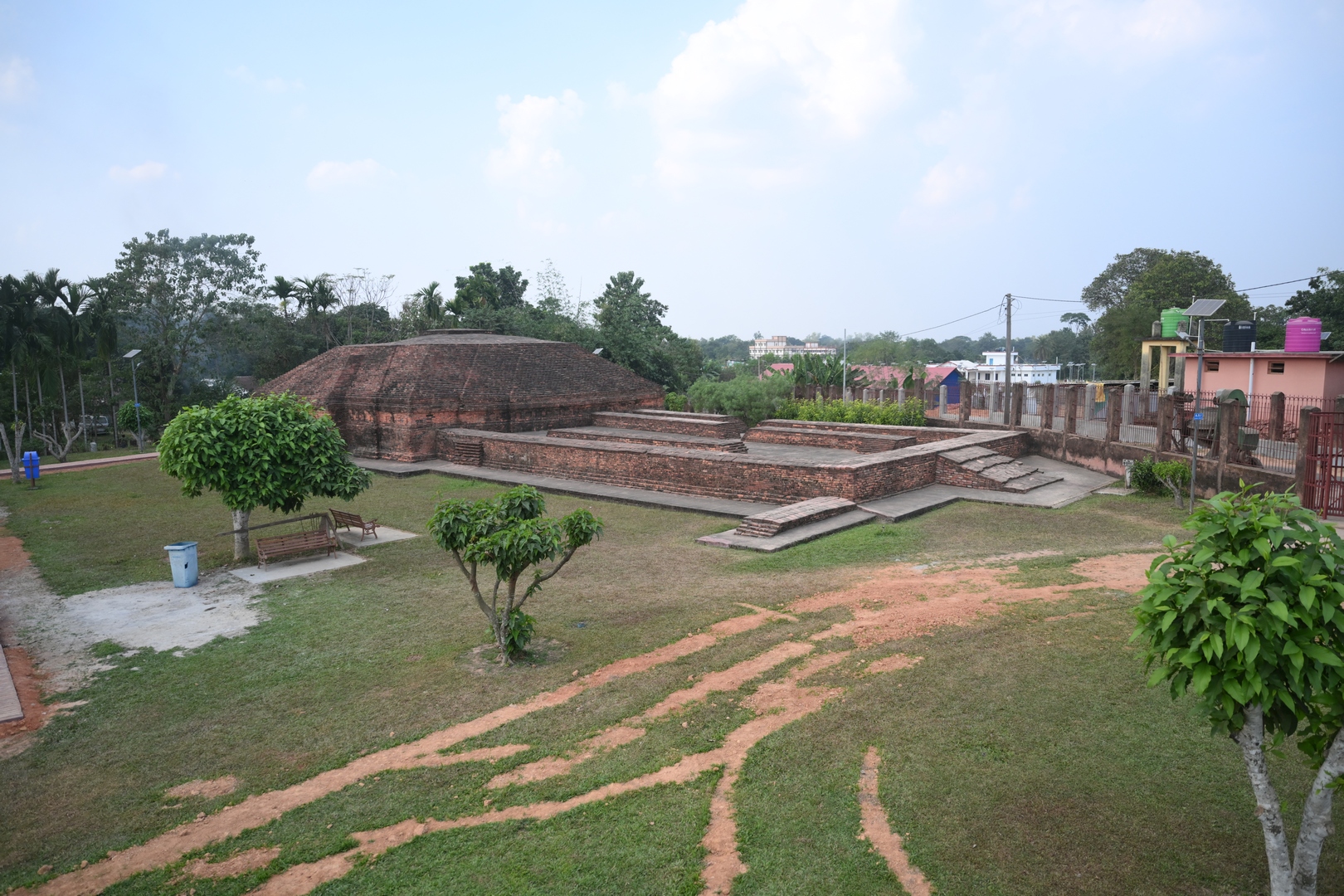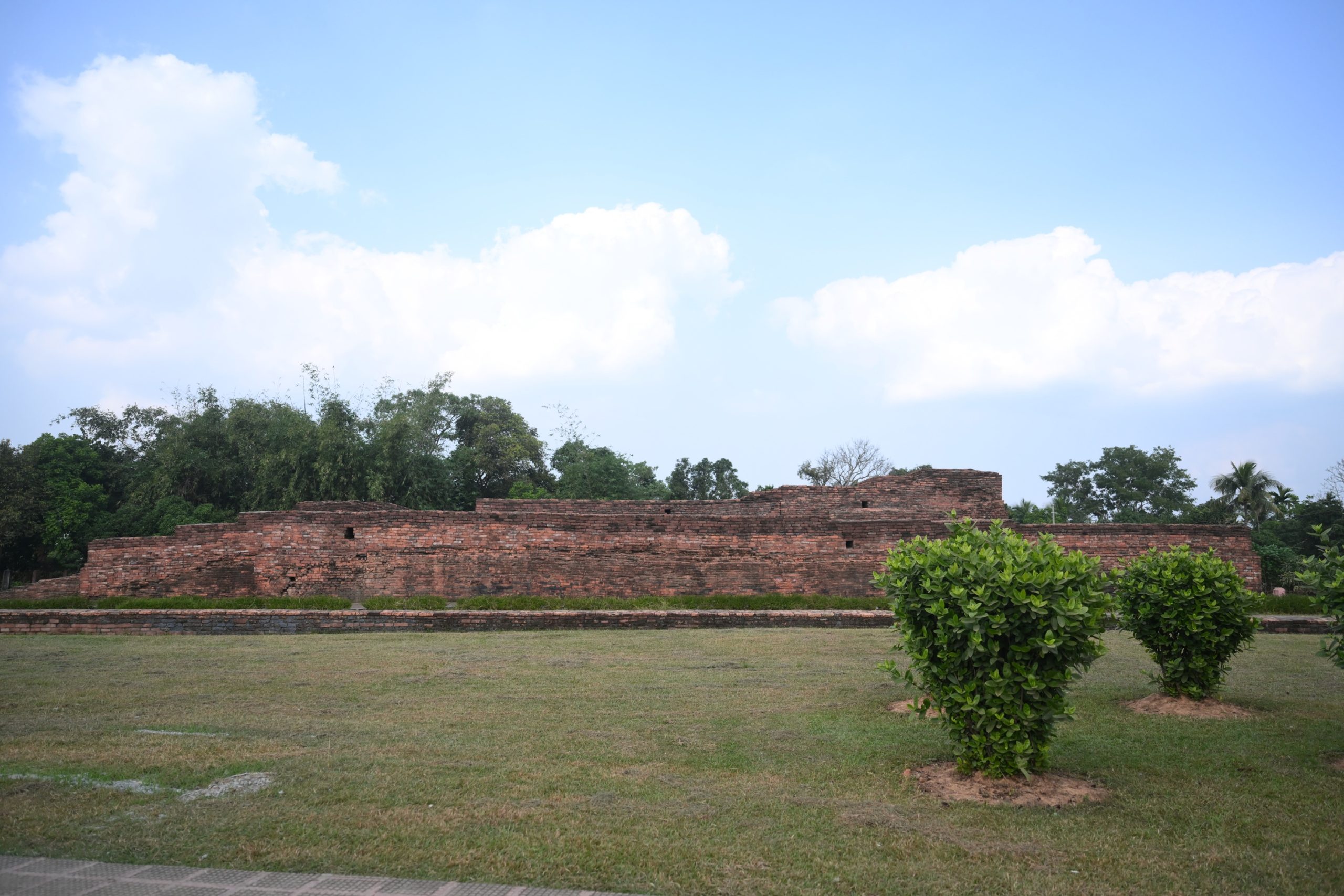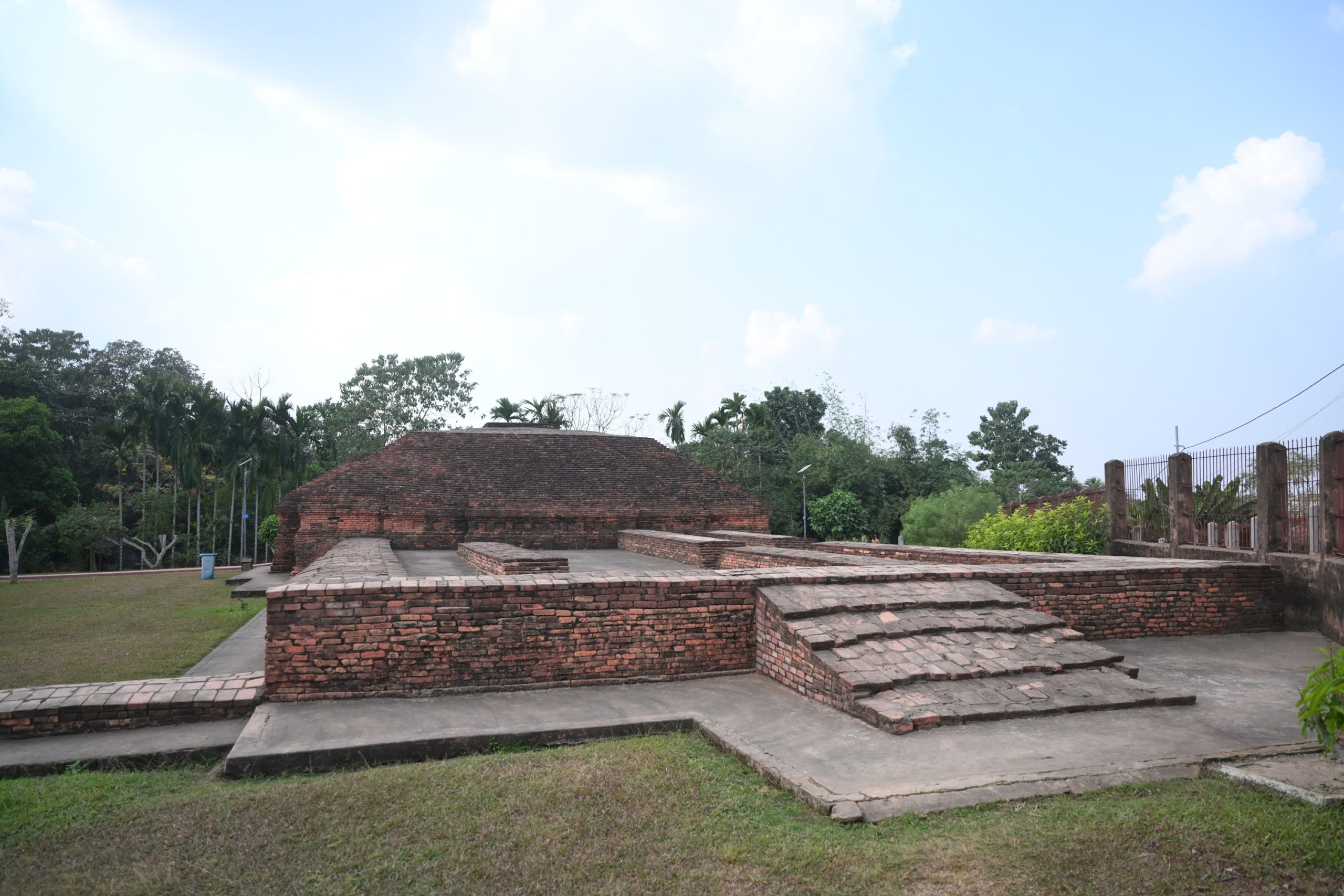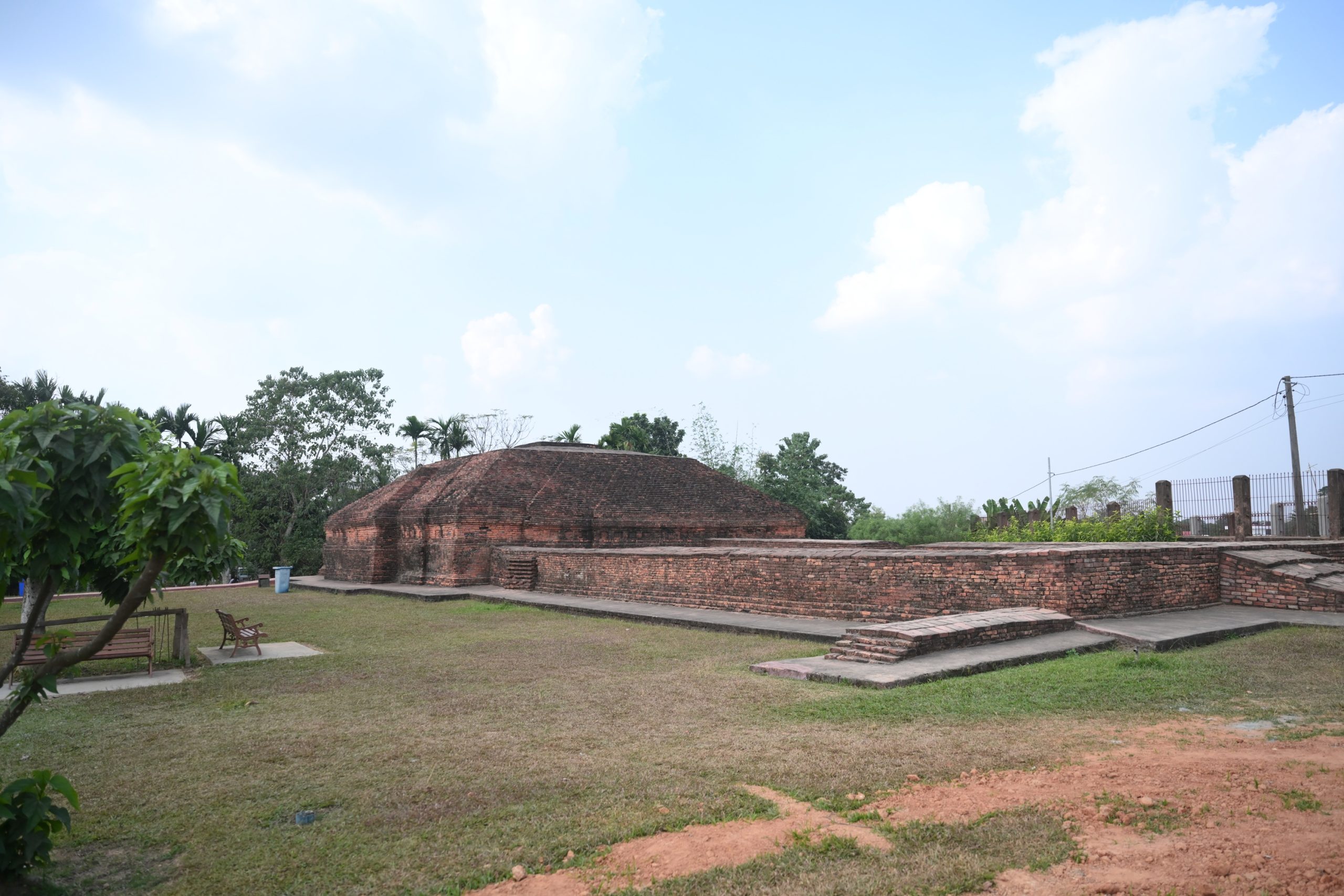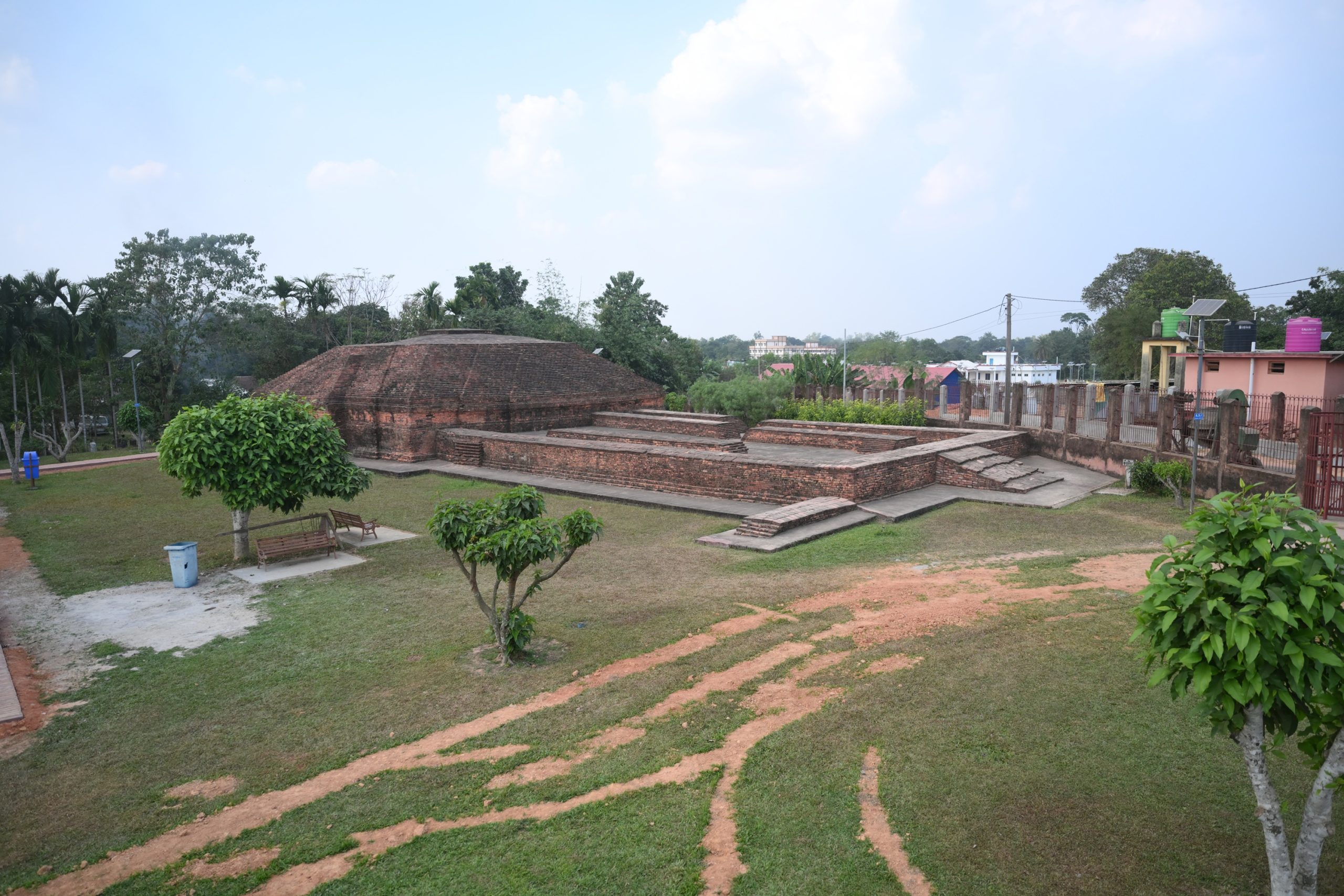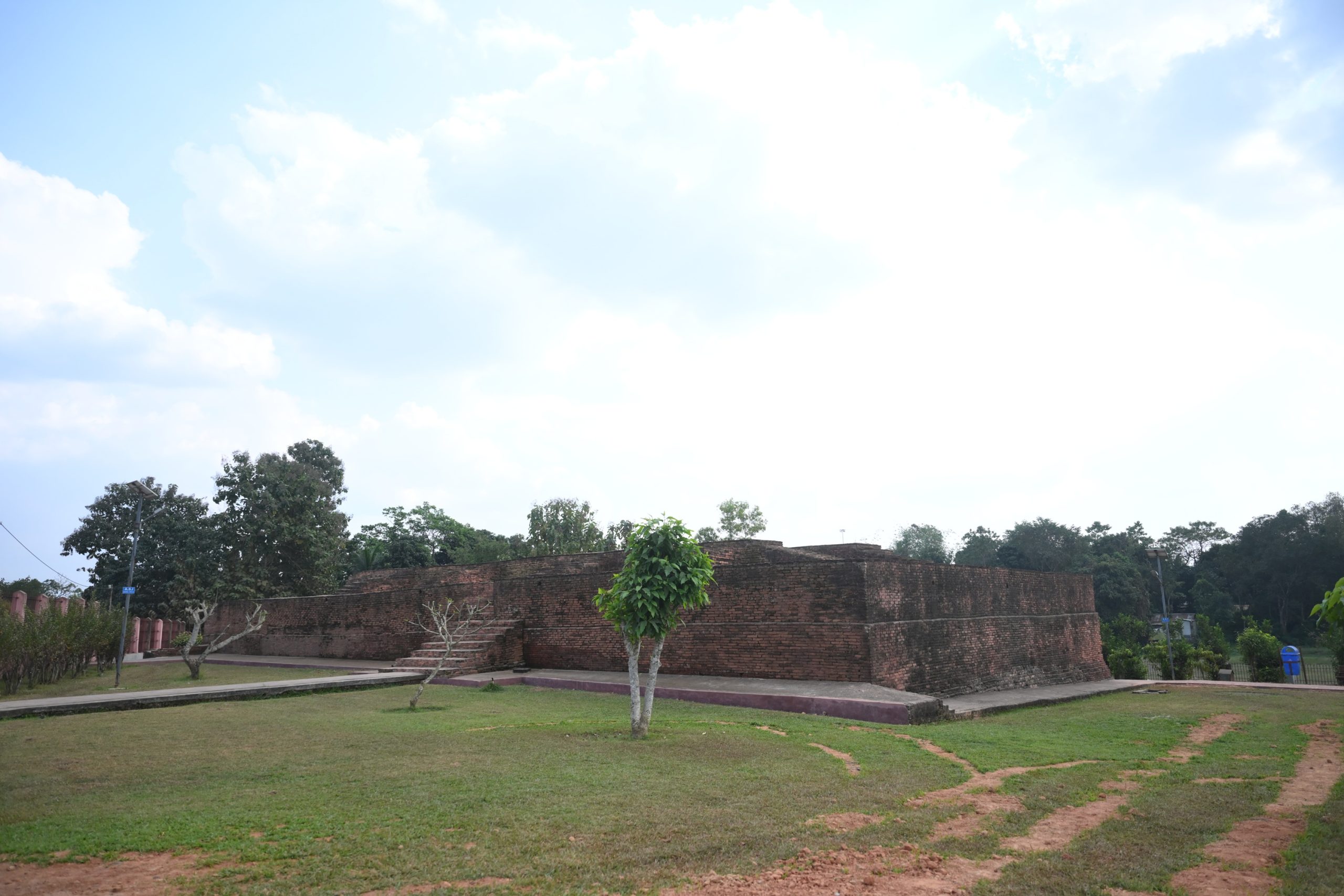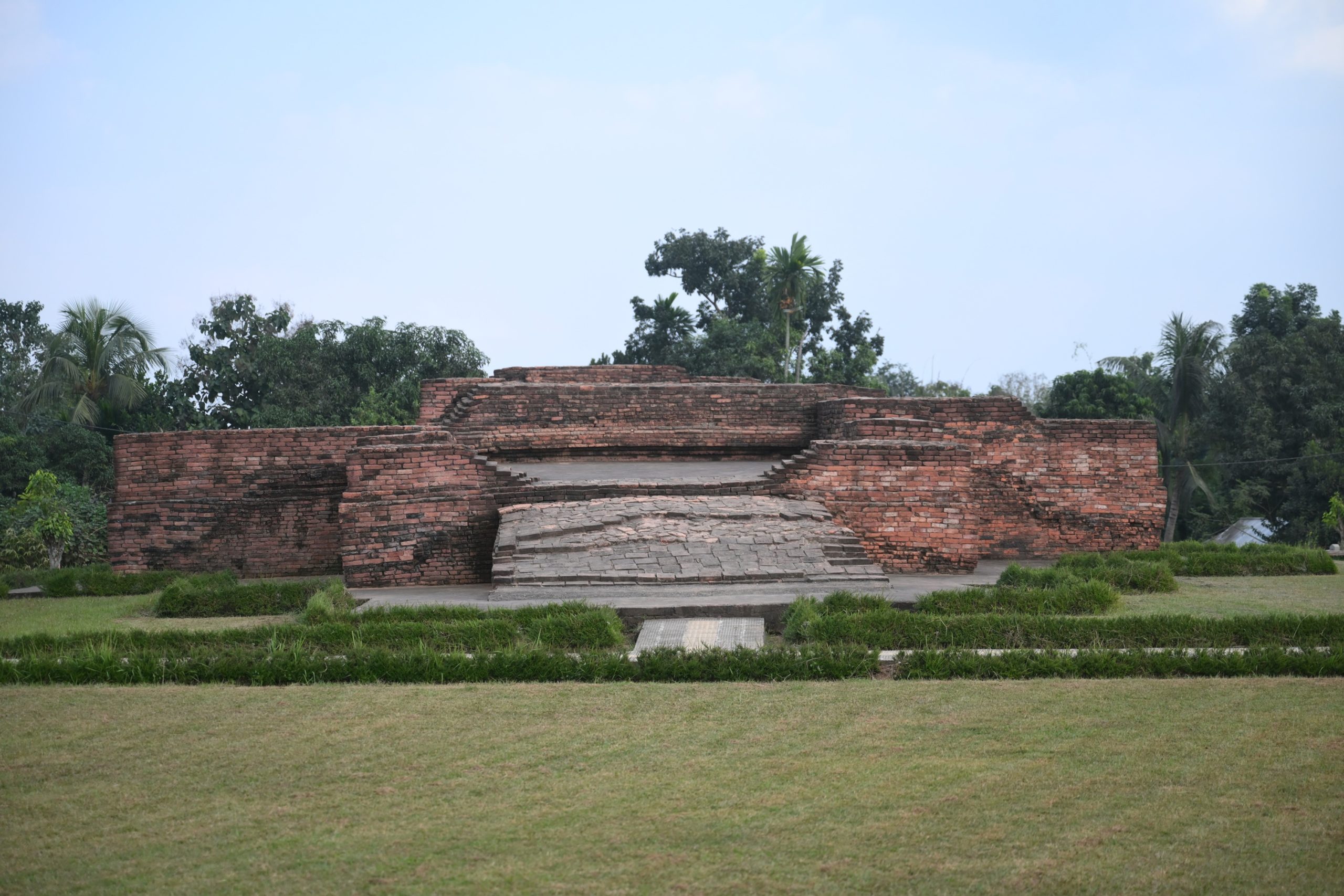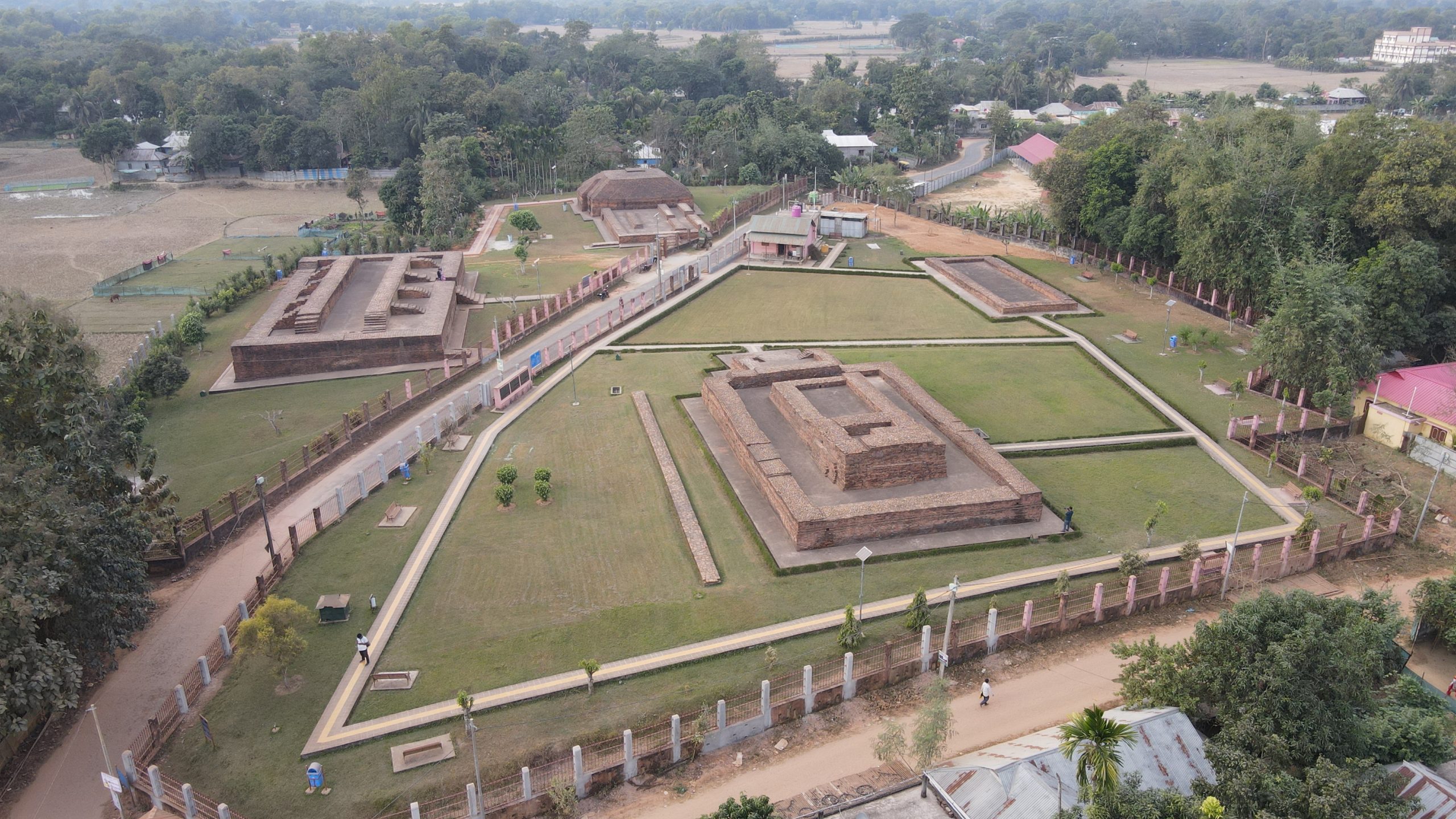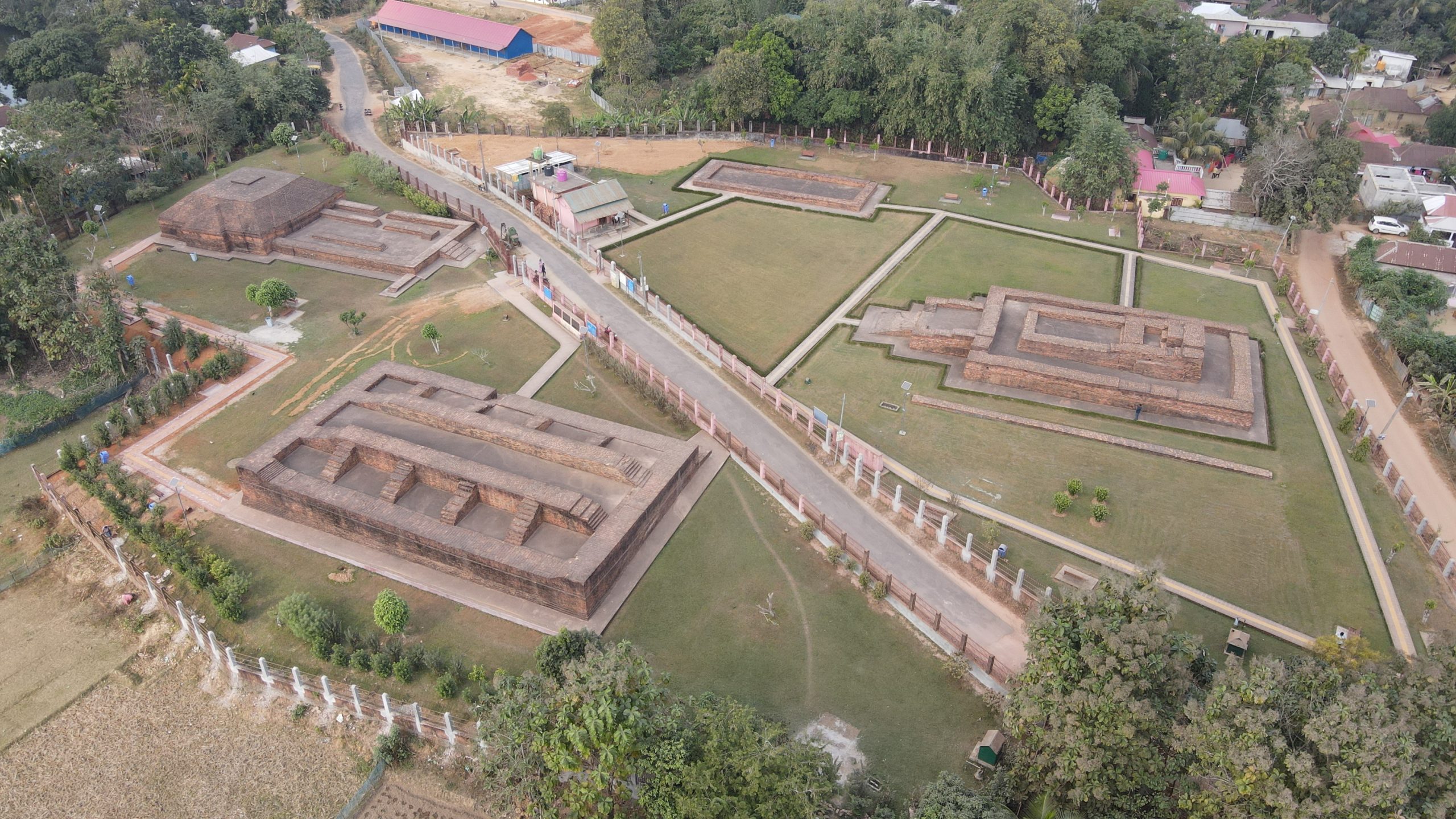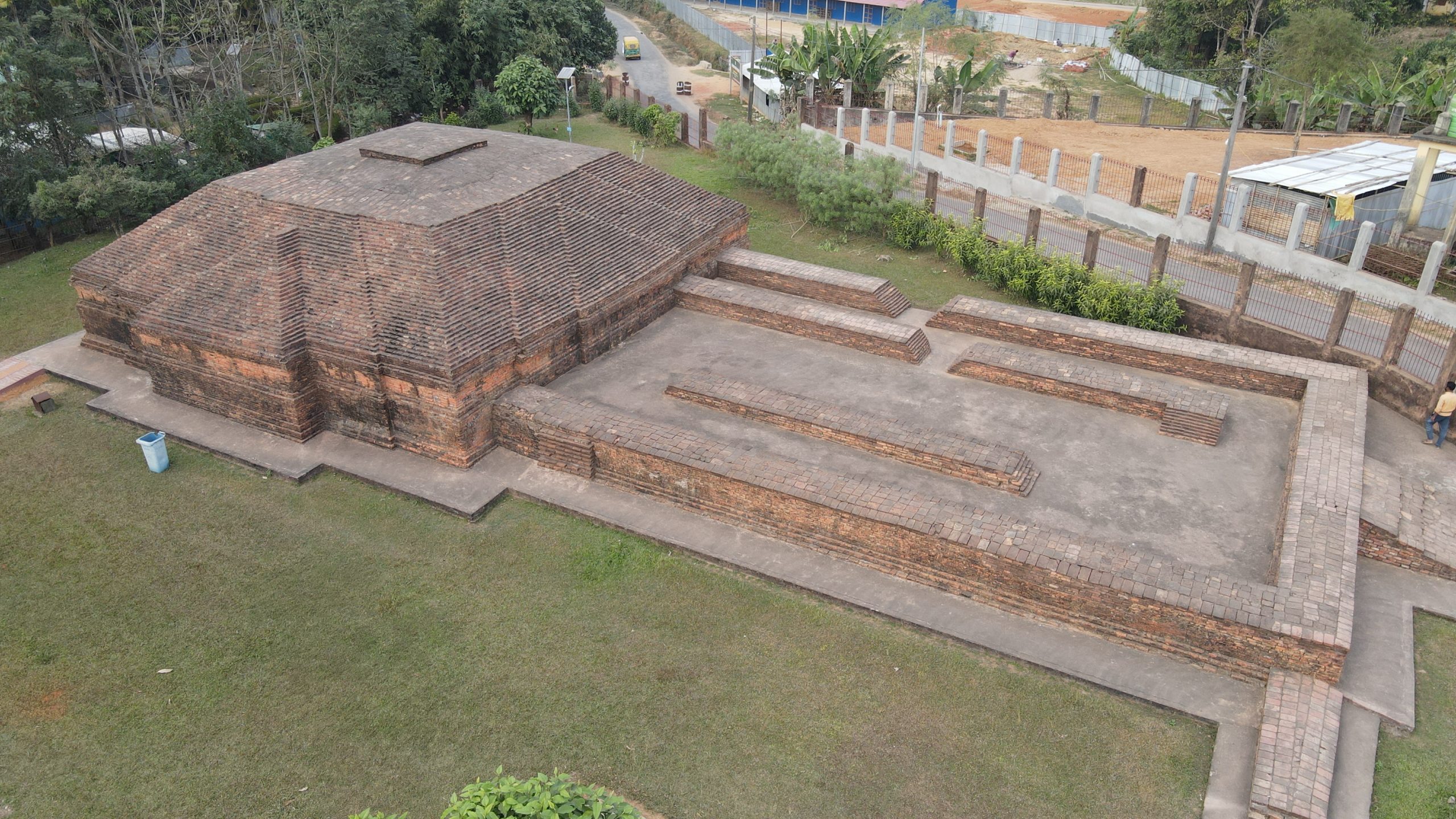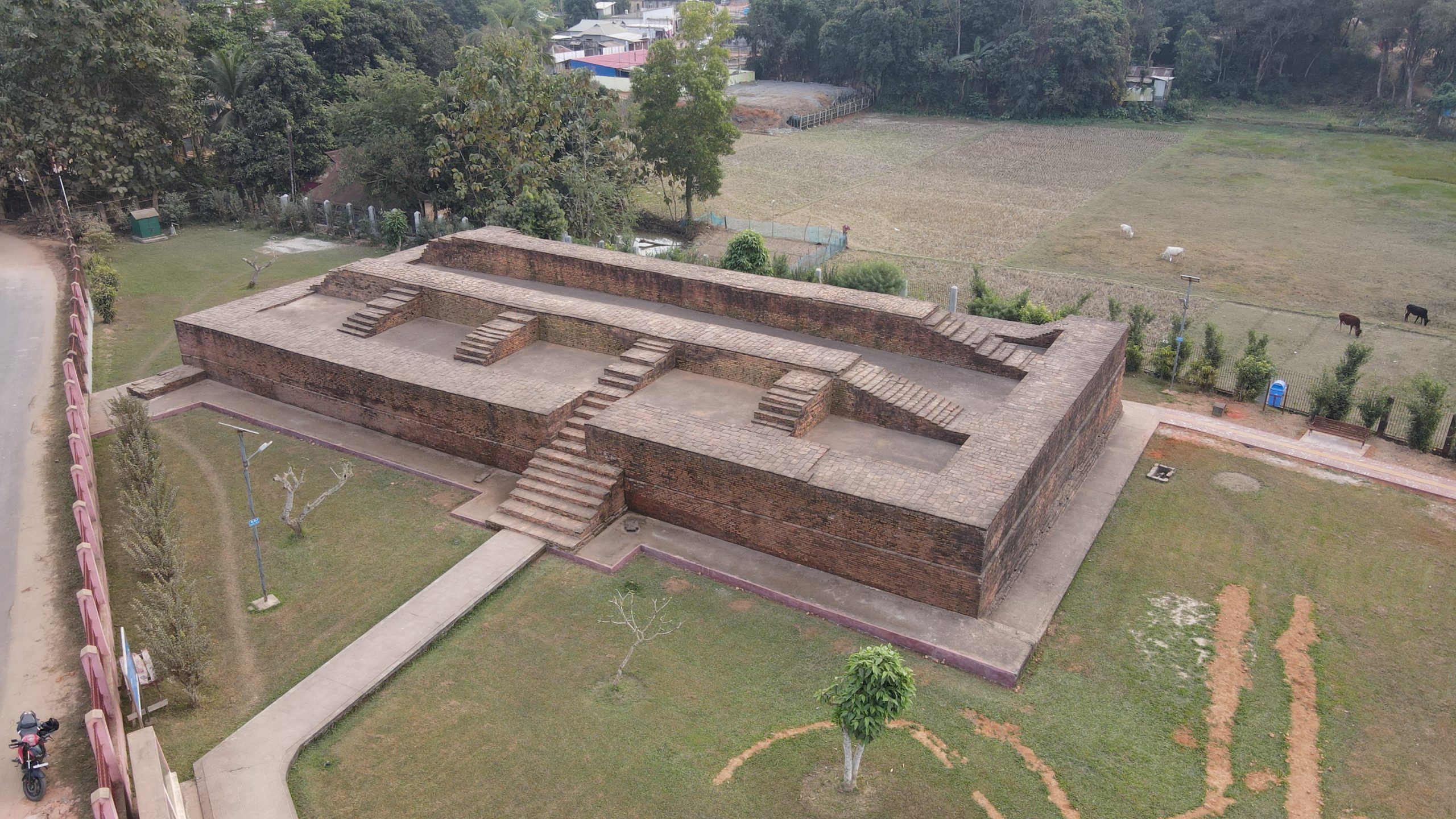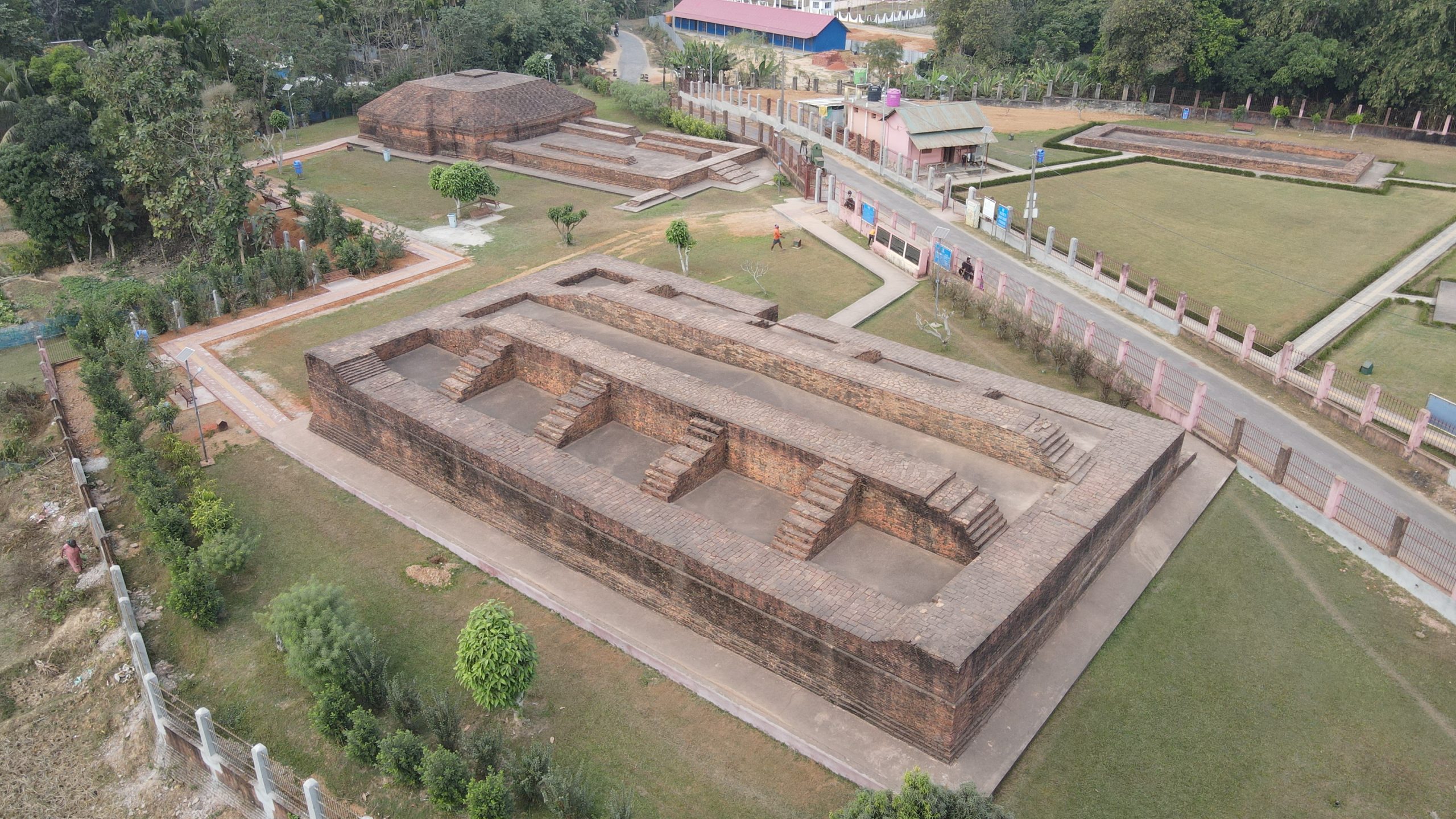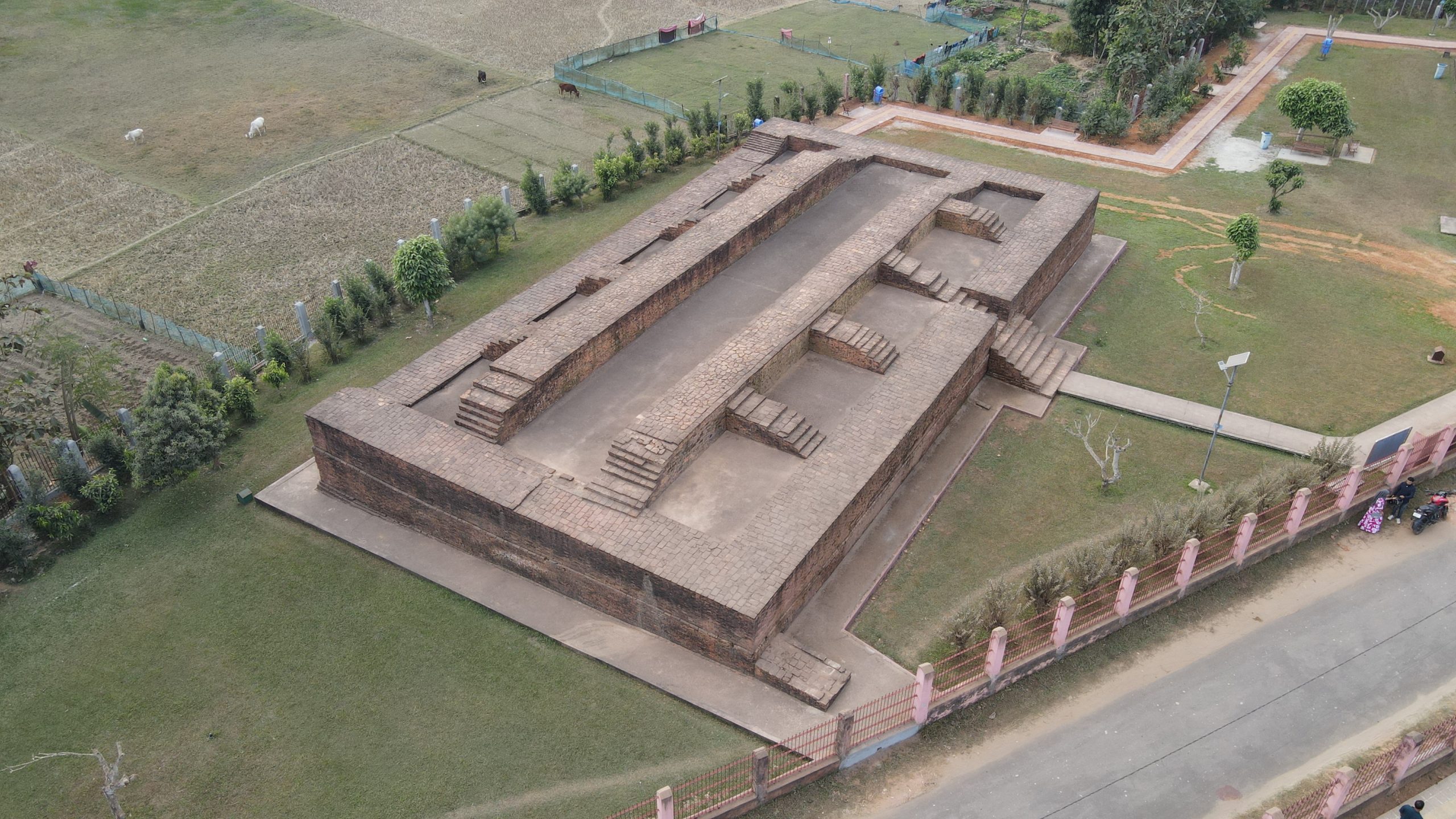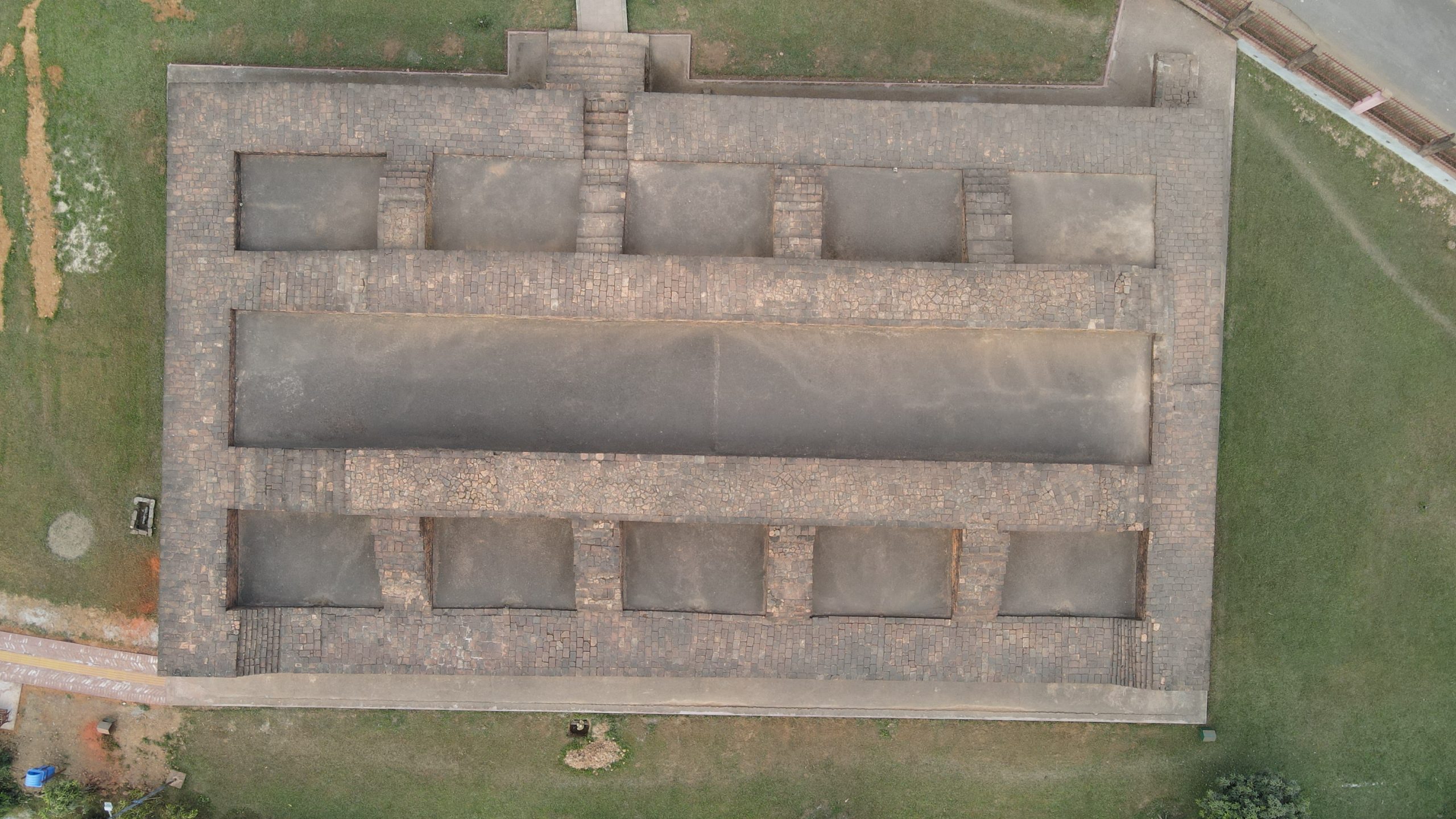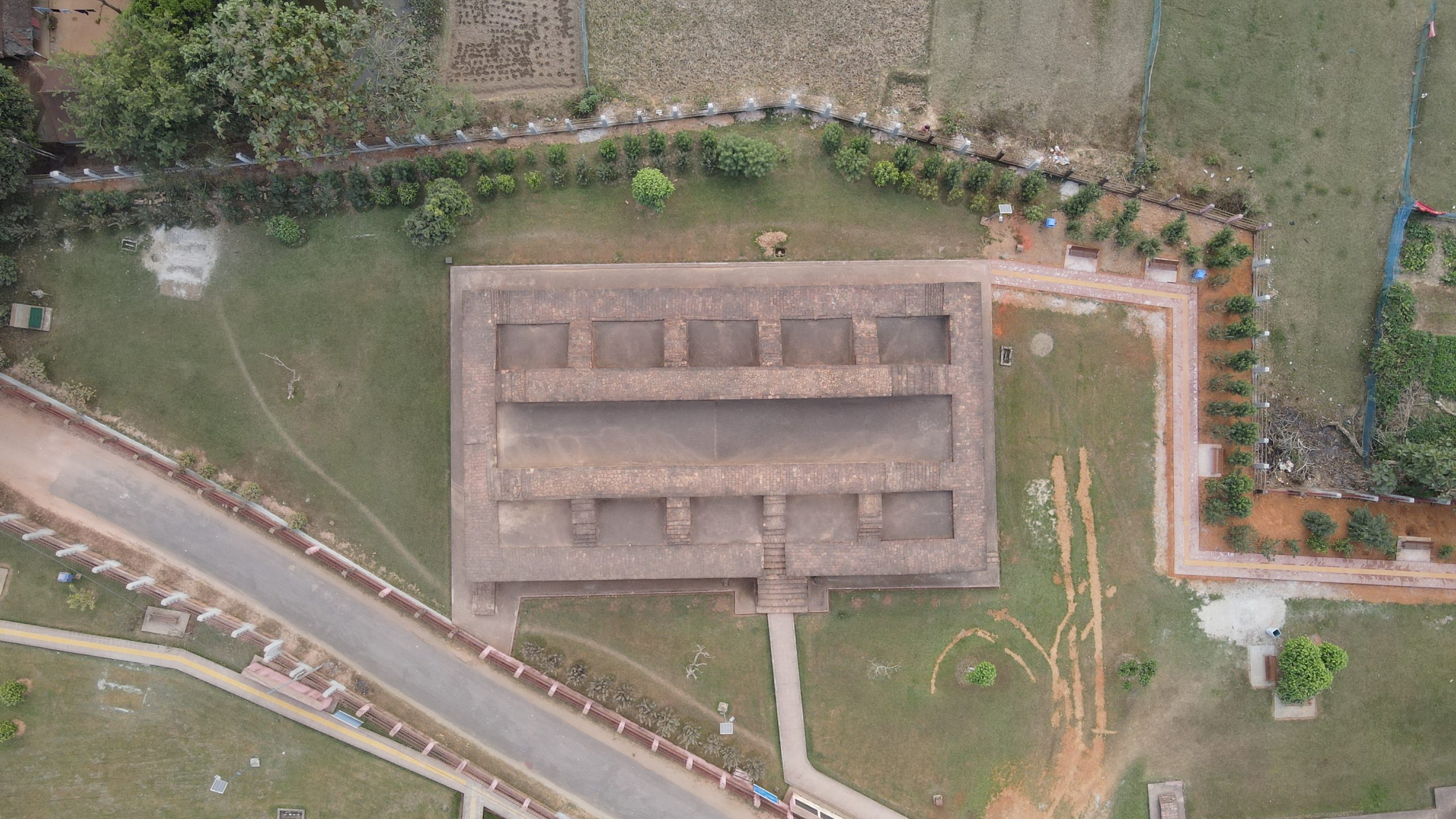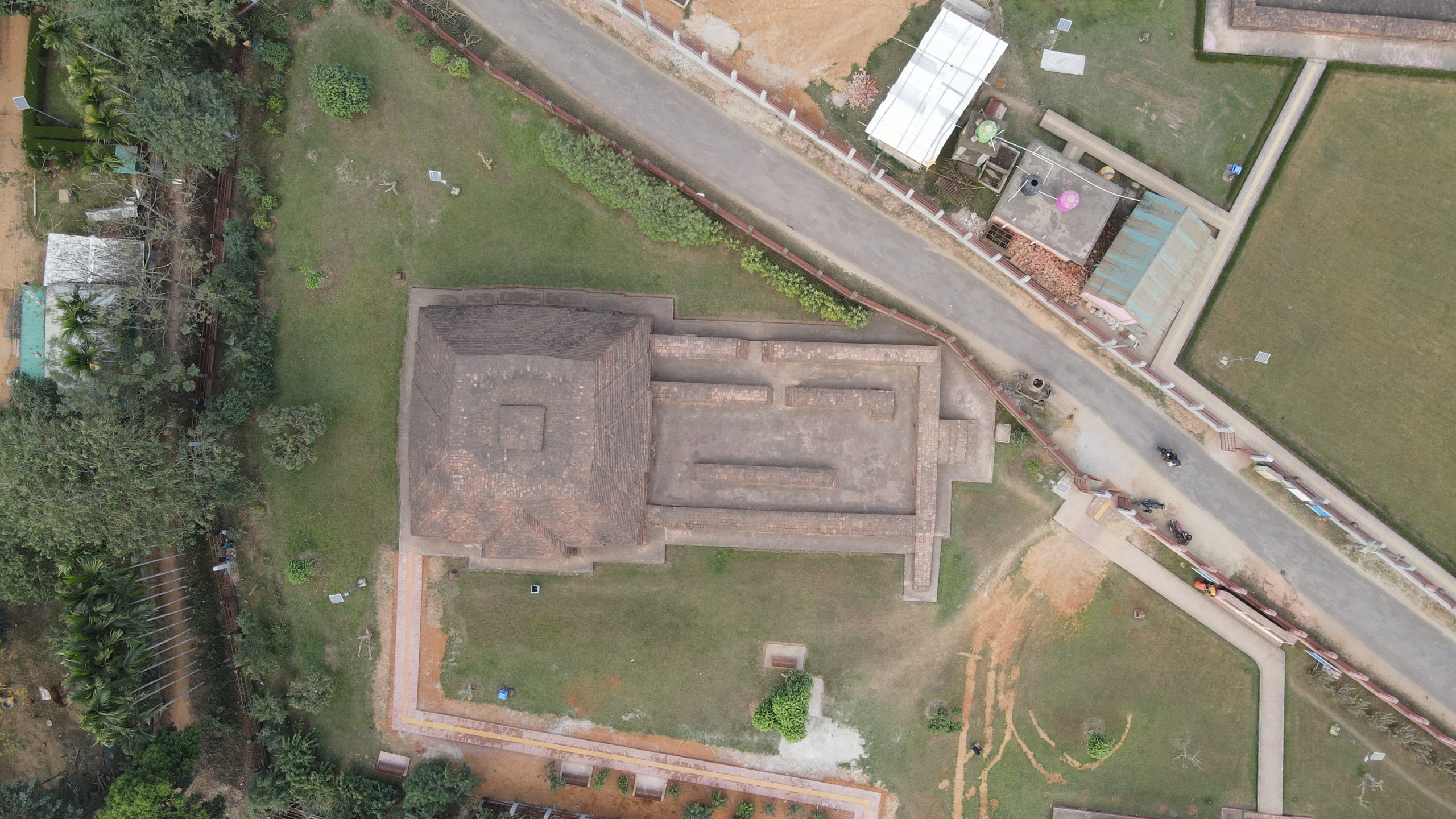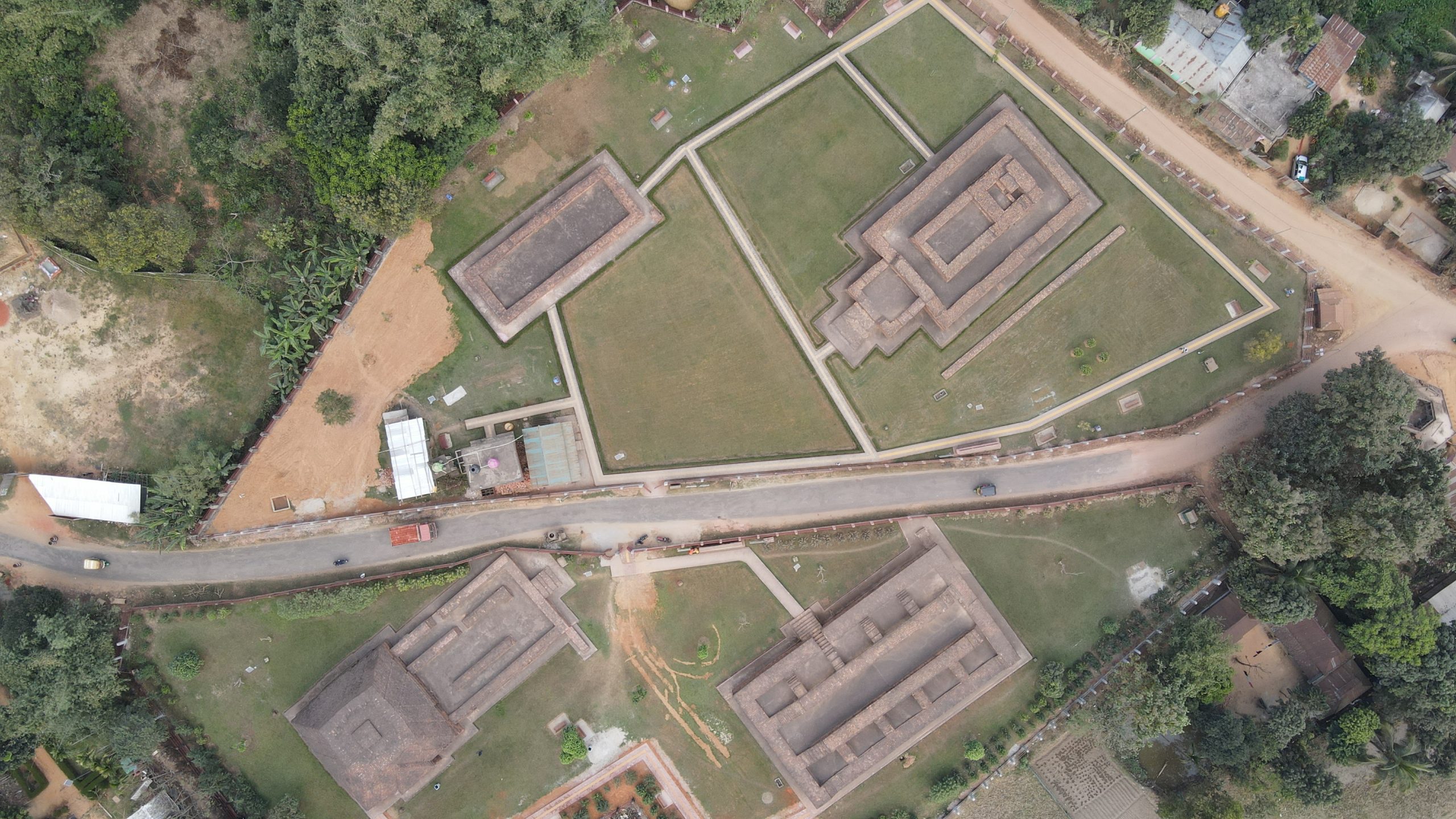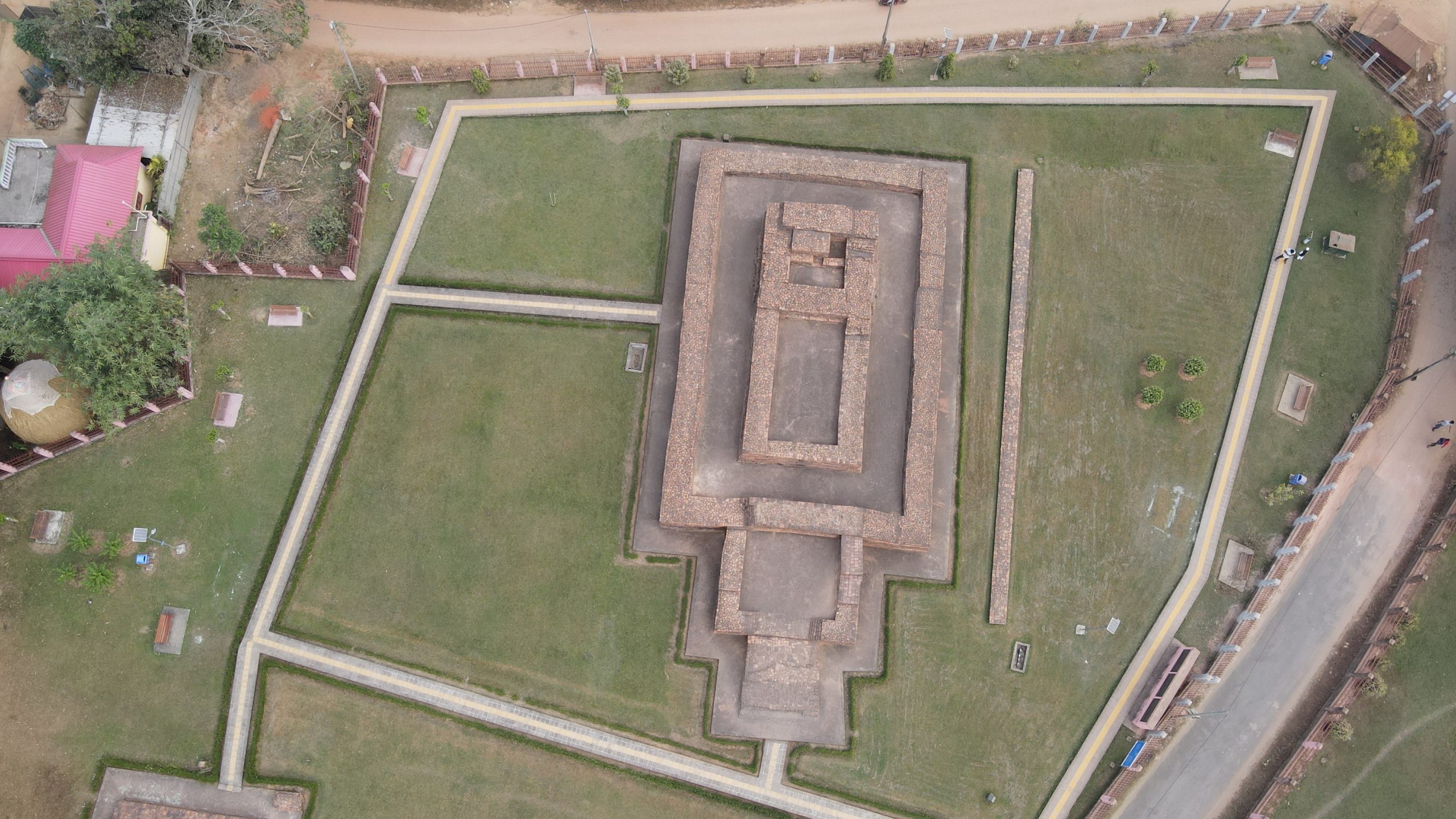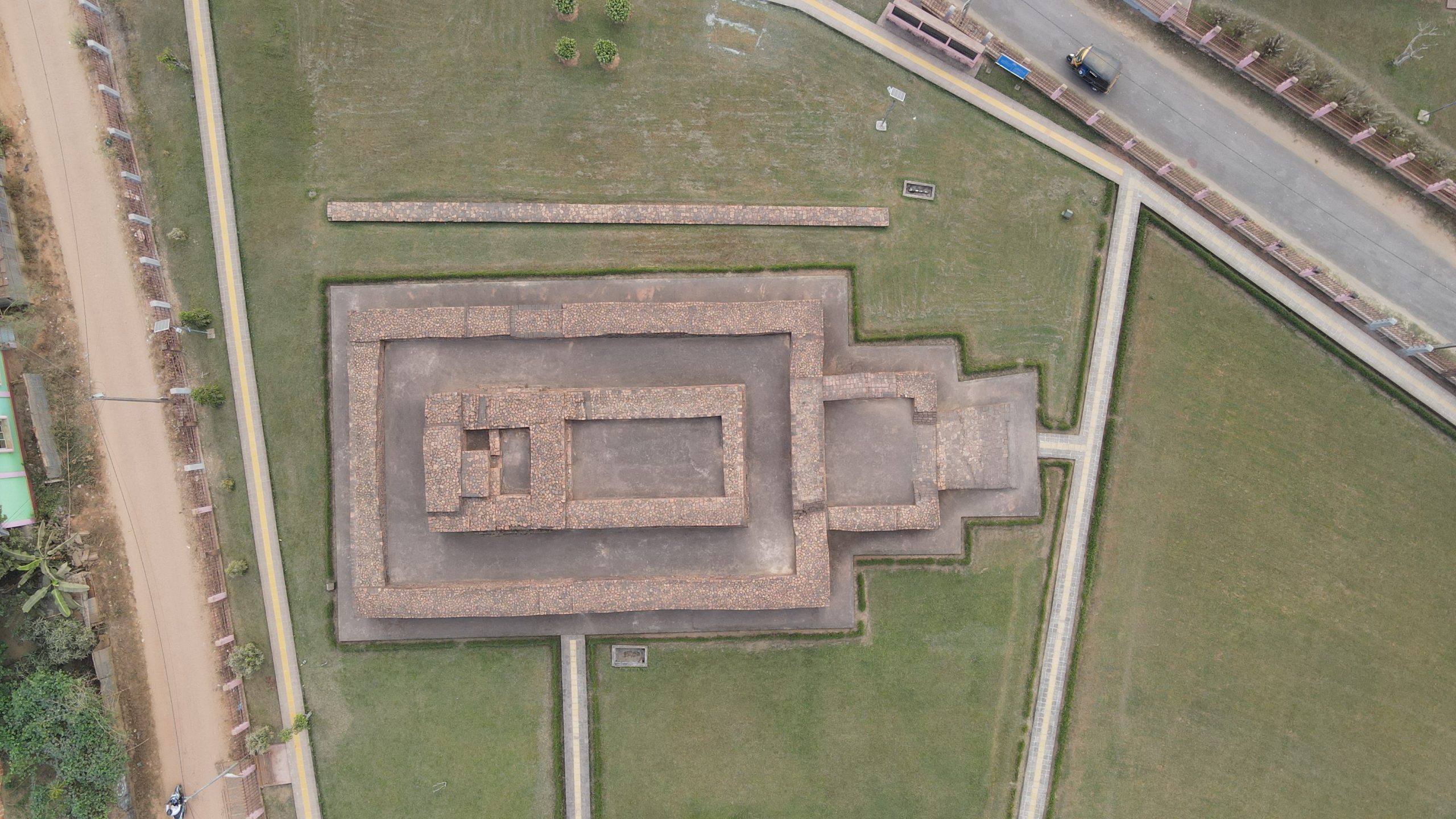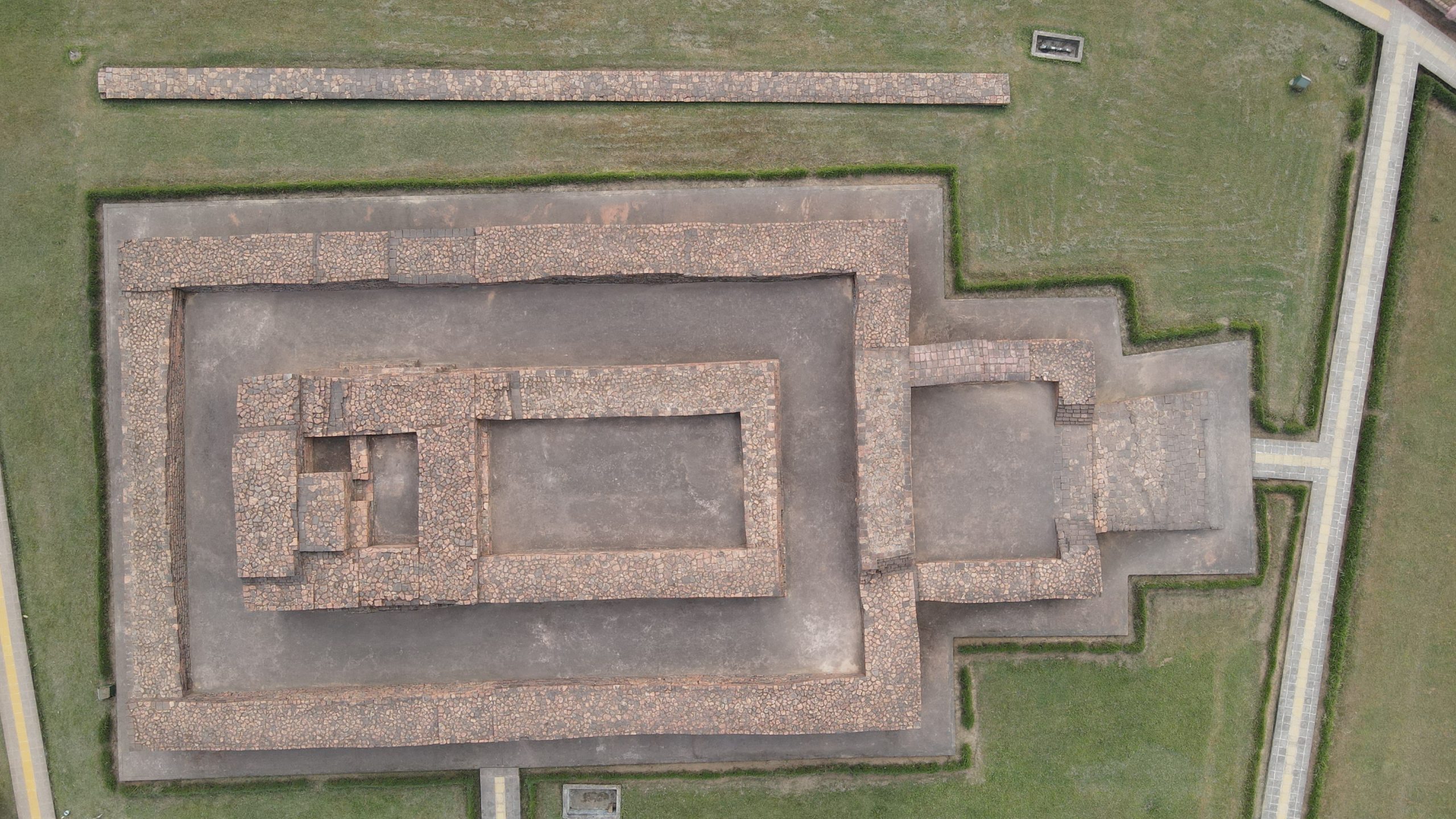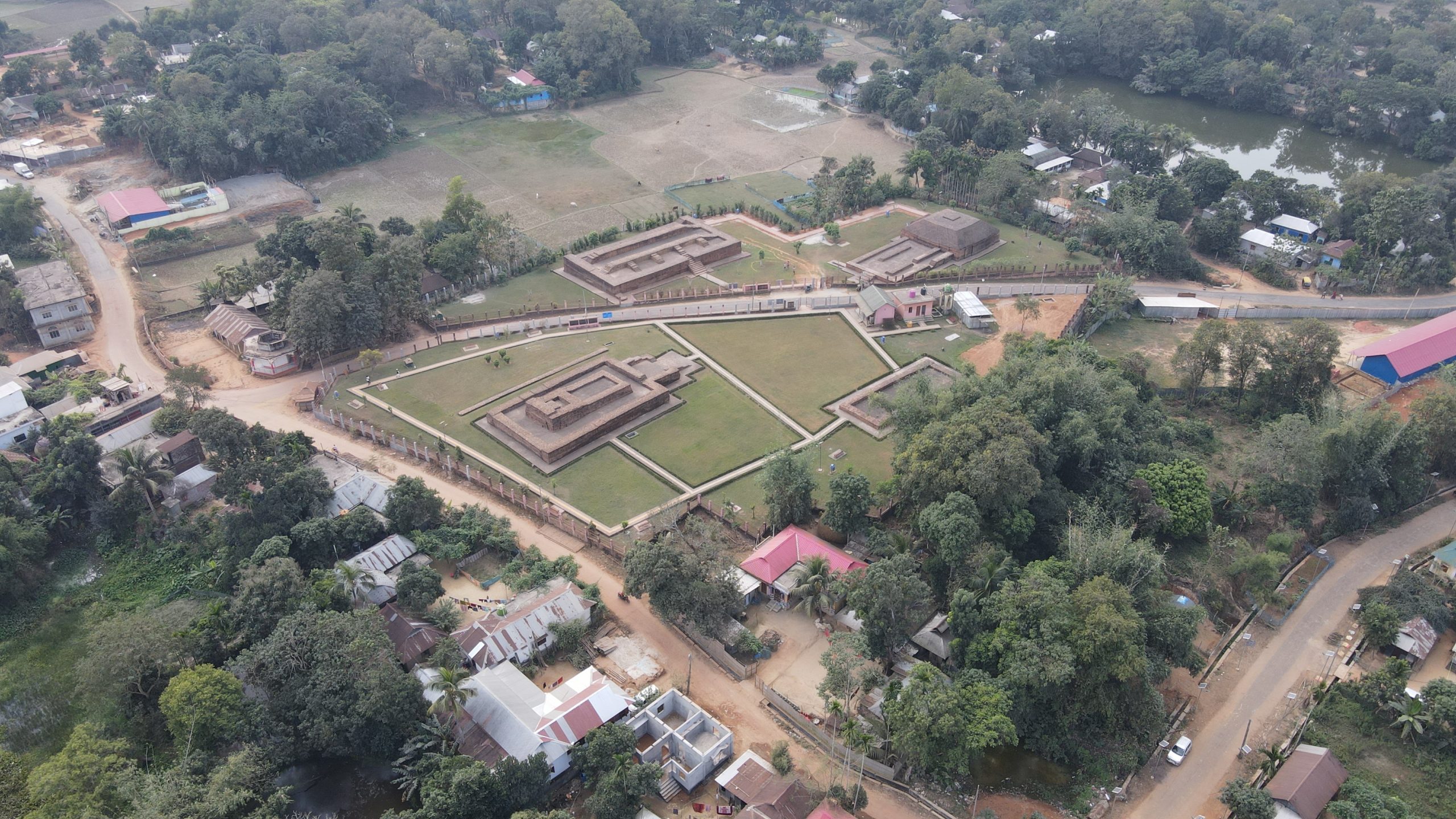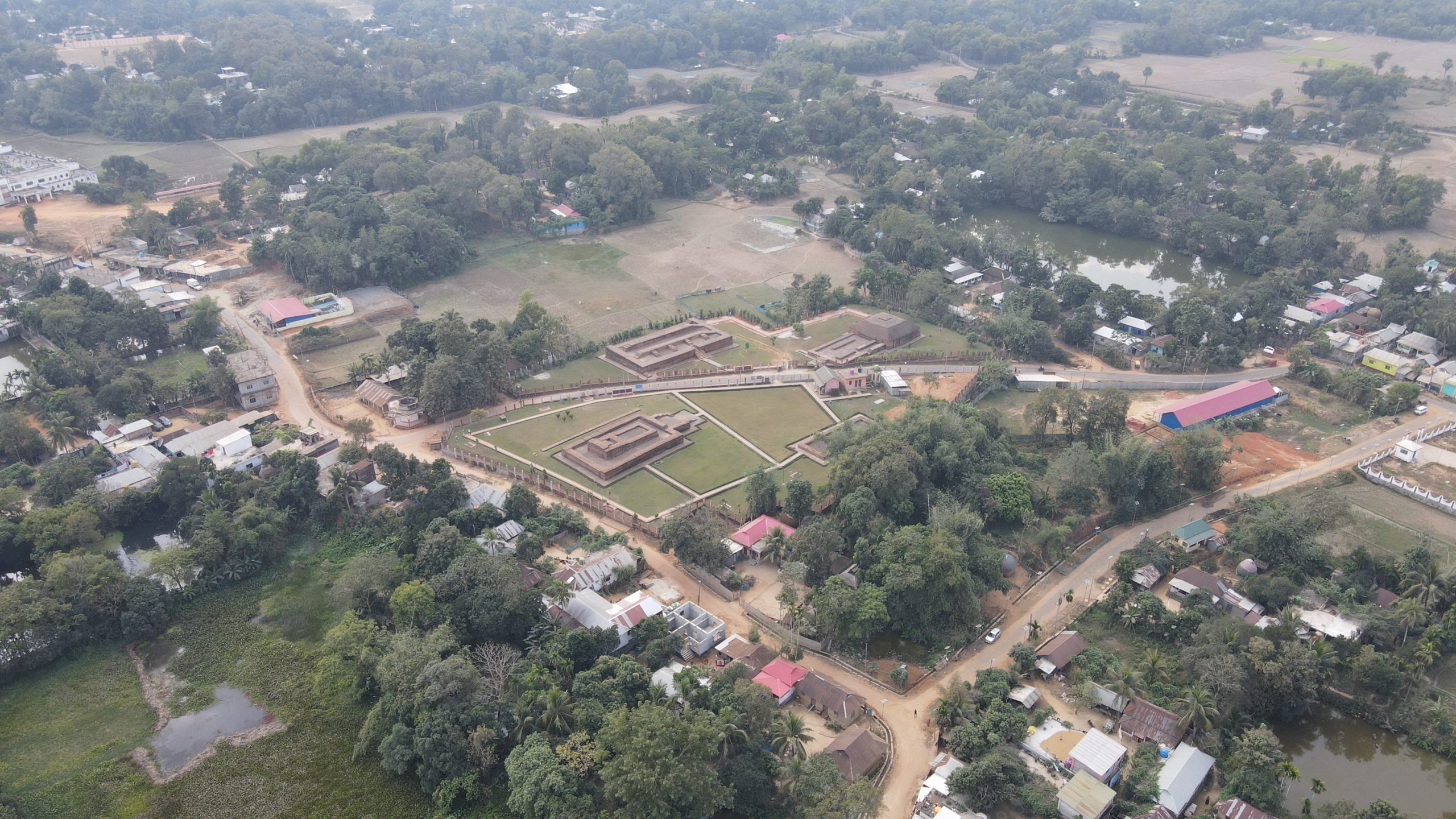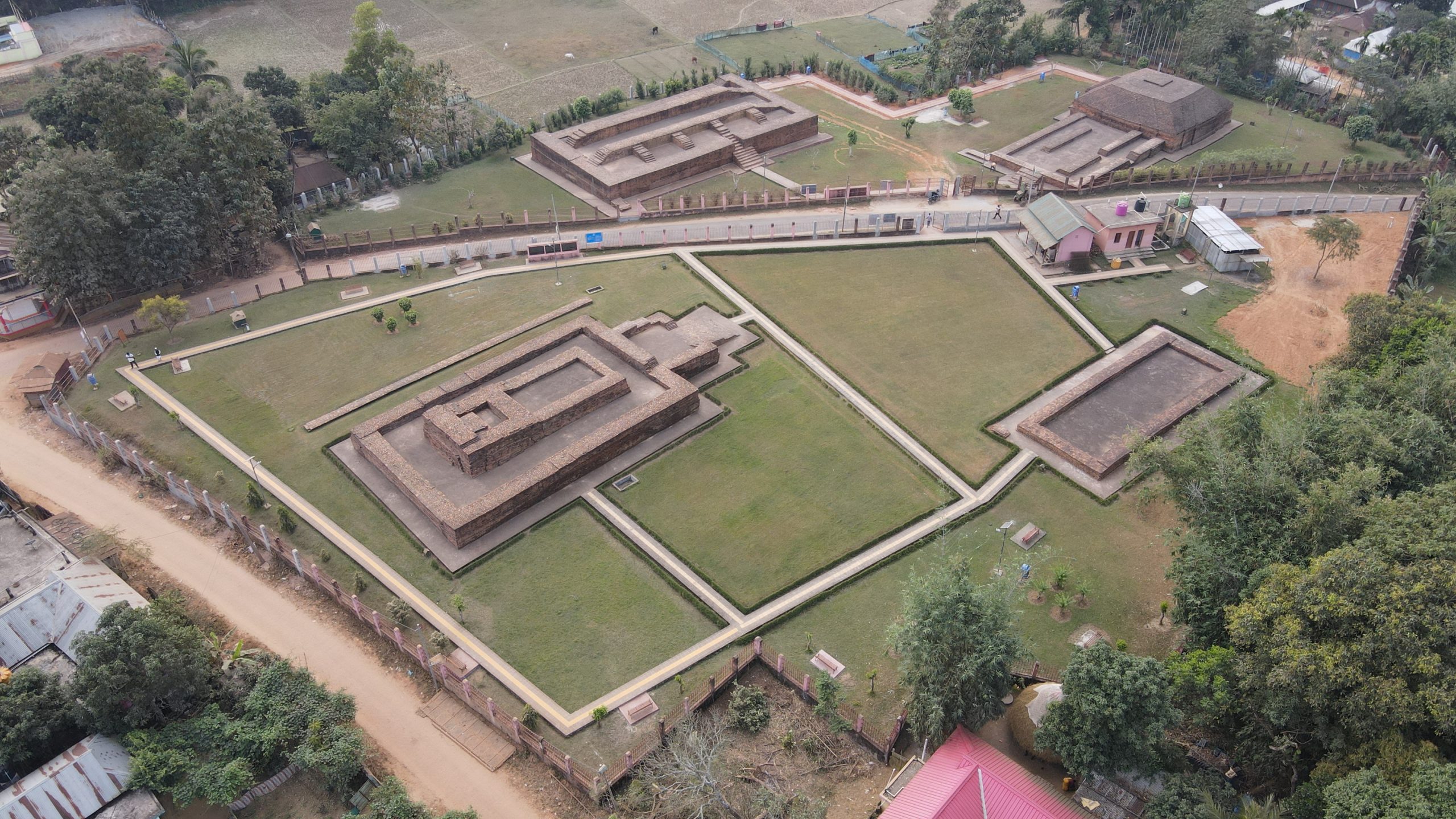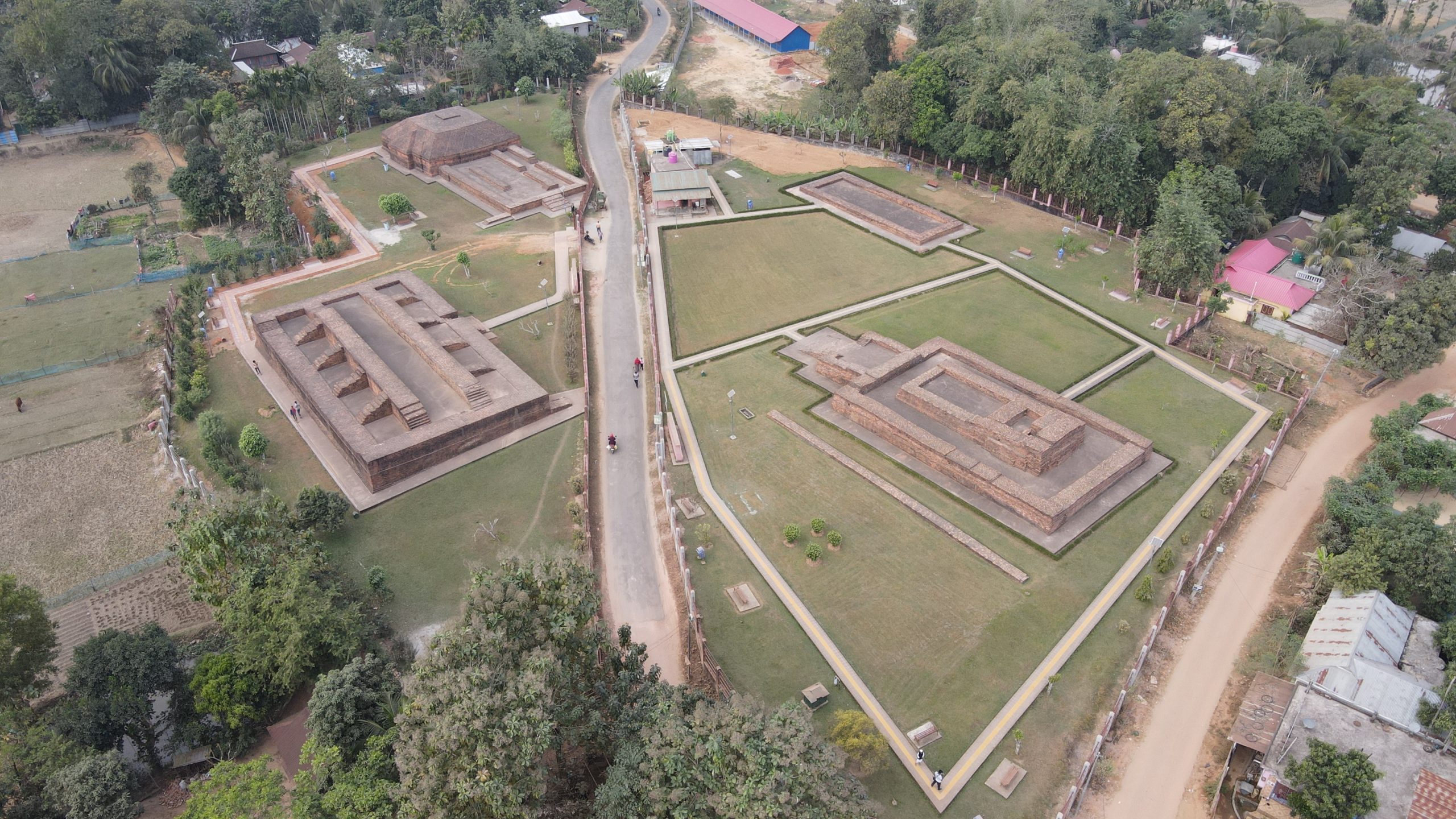
Boxanagar is located about 46km away from Agartala and 22km from Sonamura Sub-Division. The mound is spread over three acres of land. Successive excavations have enabled to expose a massive brick built stupa, Vihara, a monastery and burnt brick structure.
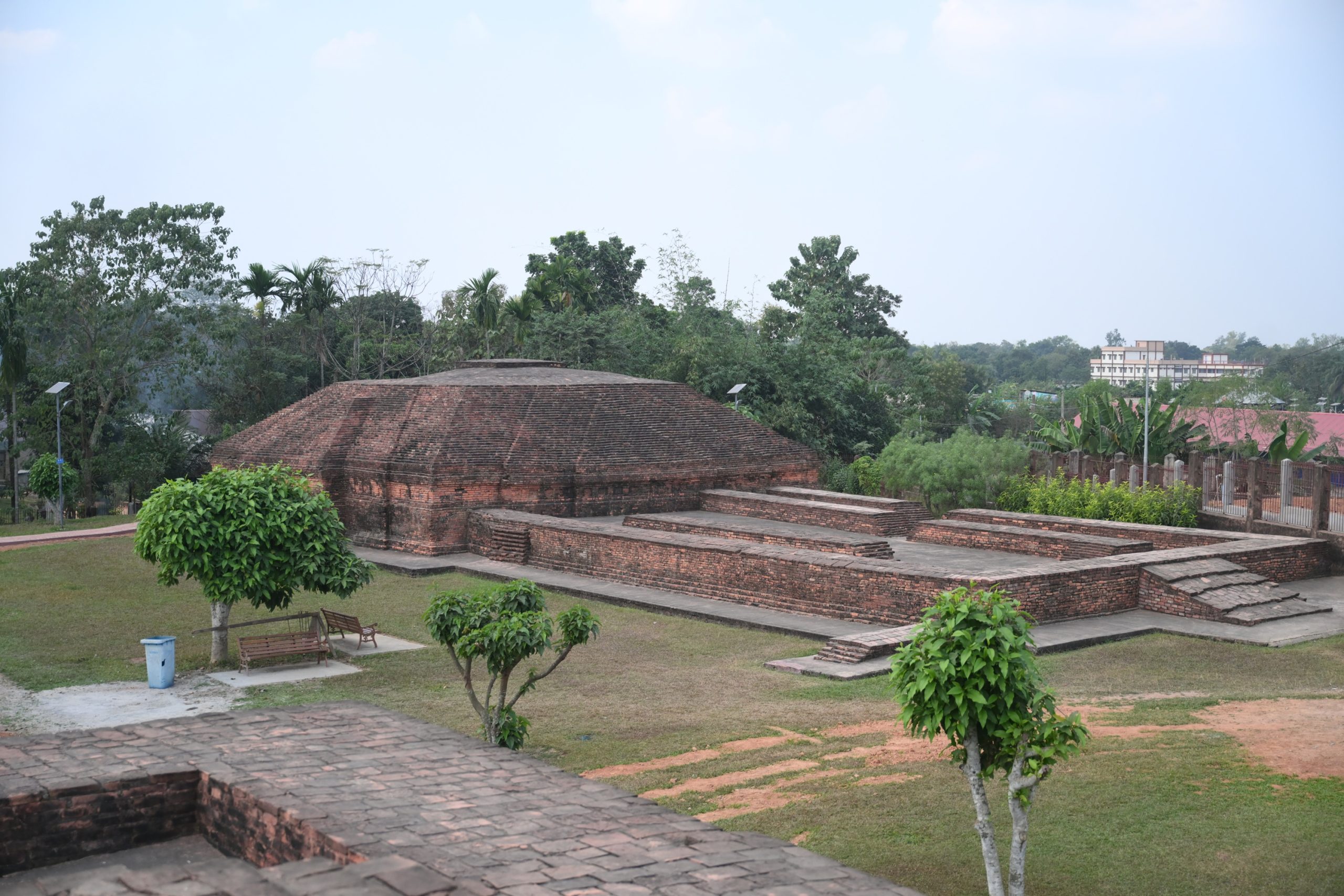
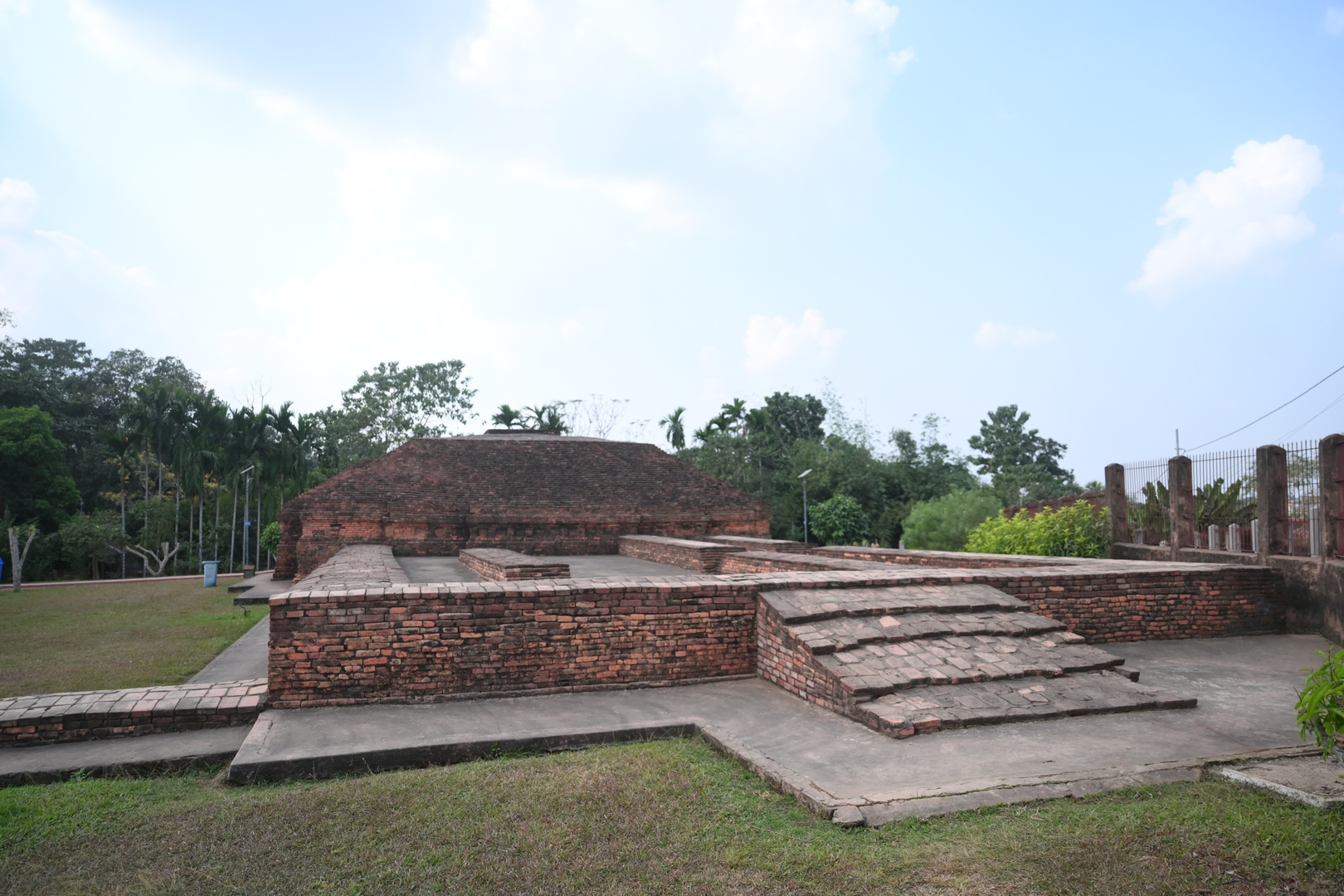
The discovery of a massive Buddhist stupa, vihara, a monastery, and other associated burnt brick structures at Bakshanagar (Boxanagar) has shed new light on previously unknown aspects of the art, architecture, and religious practices of ancient Tripura. The stupa is situated to the west of the protected site, while the Vihara is located to the east of the stupa. To the north of the protected site lie two additional burnt brick structures.
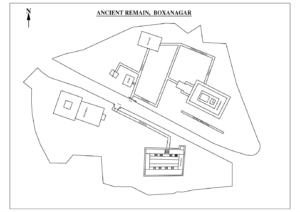
Successive excavations have revealed a massive brick-built stupa of triratha design, measuring 15.40 x 15.40 meters. The stupa’s construction employed bricks sized at (30x23x6cm), (31x24x5cm), (31x25x6cm), and others. It features eight mouldings arranged in a decreasing order upwards, with a tapering medhi crafted elegantly from burnt bricks. The harmika chamber follows a square plan.
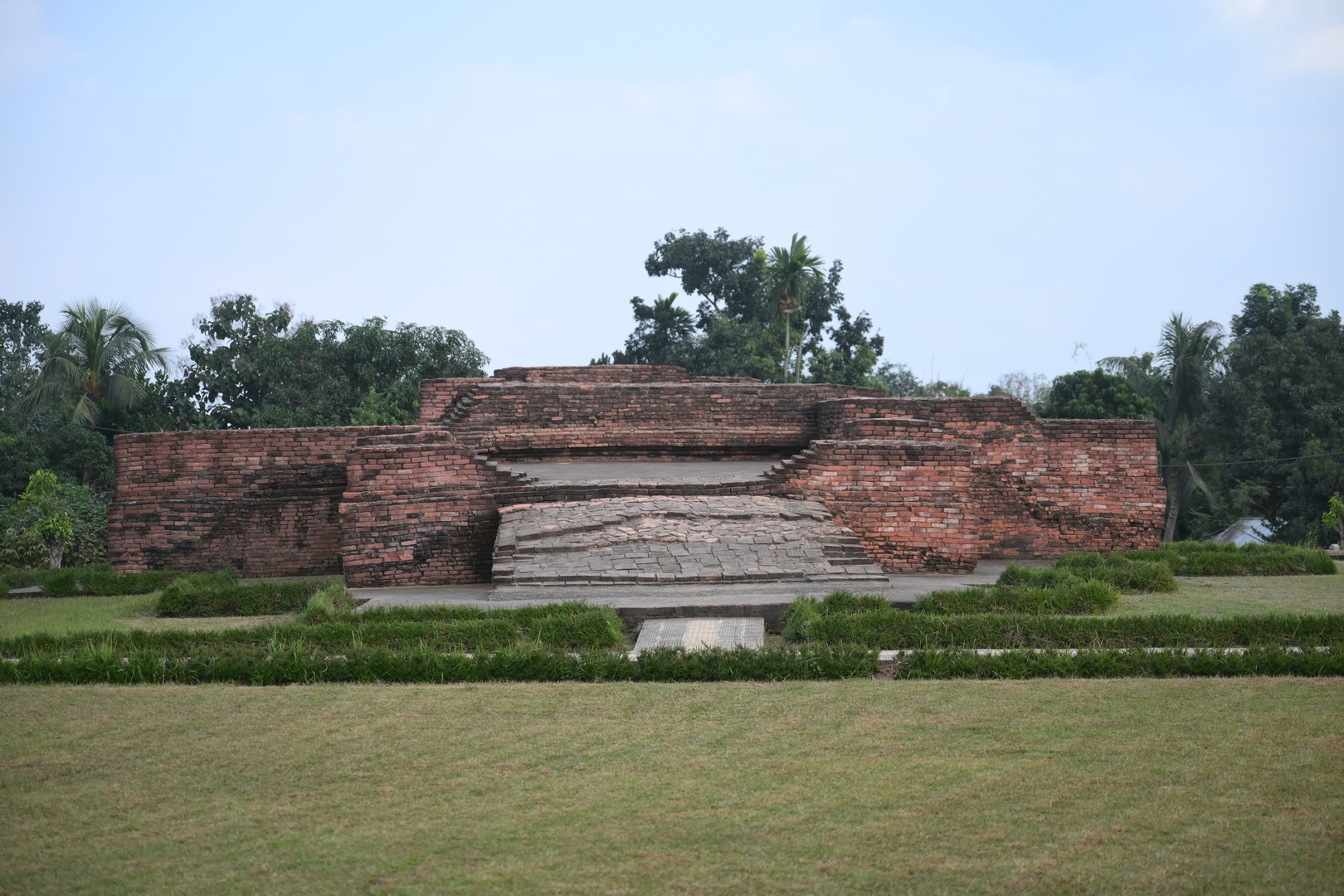
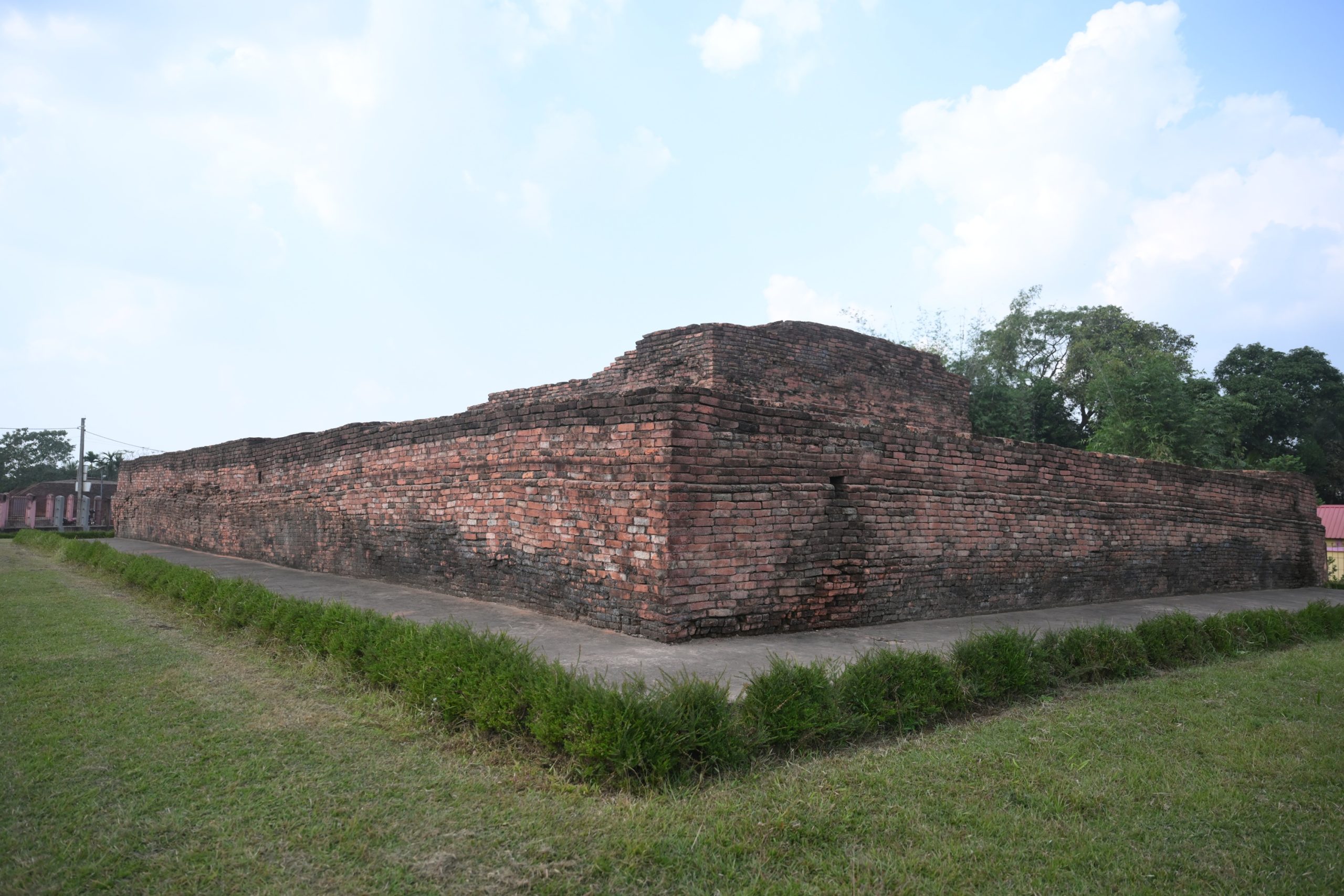
In addition to the stupa, a vihara is located on its eastern side. The vihara has a rectangular plan. The superstructure of the Vihara is completely damaged except for the side walls, which survive up to 1.60 meters in height. The brick-built monastery is having a long corridor between rows of five cells on each side.
The excavation of another mound at Bakshanagar (Boxanagar) has revealed a fully burnt-brick structure with Triratha projections and a square sacred chamber. In front of this structure is a rectangular hall enclosed by a wall, with a brick-rammed floor likely used for congregational purposes. A wide Pradakshinapatha surrounds these structures.